For the longest time, I had a beat-up Parado,” Wale Davies tells Joey Akan, settling into the couch across from him in Lagos.
“Up until 2017. I will never put in my rap that, oh, I’m driving a Bentley, Davies said.”
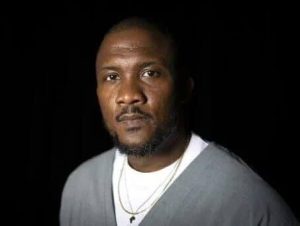
He says it without ceremony. No performance of humility, no wink toward the audience. Just a man accounting for himself. It’s the way he has always done it. Wale Davies, known as Tec, is one half of Show Dem Camp, the Lagos duo he built with his partner, Ghost.
Together they spent over fifteen years grinding, mostly unnoticed by the Nigerian music industry, until the space couldn’t afford to ignore them. Davies moved back from the UK with nothing guaranteed. He drove a beat-up car through an industry that called him an ajebota, and meant it as an insult. He made music that didn’t fit the tempo of the moment and performed to a hundred people at a time, in small venues on the mainland and the island, until the hundred became a thousand and the thousand became a festival. He never signed to a label. He never changed his sound to chase a wave. He never pretended.
That, more than any hit, is the through line.
The story of how Show Dem Camp got started is really the story of how Nigeria got Wale Davies back. After years in the UK, he came home to help a friend execute business. A close buddy had put together the 2face and Friends Tour with MTN, a contract big enough to make a twenty-three-year-old in a corporate job in the UK stop and do the math. “The contract was way more than what I was earning in the corporate world at the time,” he says. “So I was like, damn, these guys are getting this much money at age 23.”
Davies signed up as a producer on that tour. He pulled the show together, traveled with 2face, P-Square, Naeto C, Ikechukwu. He watched the industry up close, from behind the scenes, at a moment when he had just arrived back in a country he would now have to learn all over again. “It was the first time I had seen, like, I just moved back to Nigeria, it was like a crash course into all of the artists, all the people that were doing great things.”
When he and Ghost eventually launched as artists, they already knew everybody. 2face and the late Sound Sultan were on the first album, as the industry respect came early. But the public recognition did not. “The artist knew,” he says, “but then the public were like, who are these guys?”
They were, to a segment of the Lagos music scene, the rich kids. The ajebotas who had gone abroad and come back thinking they could teach everyone something. He dismantles this mythology with precision. “I live in Bariga,” he says. “Like, jeez.”
The perception had nothing to do with reality and everything to do with the fact that they had British accents, wore certain clothes, and didn’t rap about things the Lagos street scene recognized as its own. On one side, his family was asking why he had wasted a foreign education to come home and rap. On the other side, artists who were hustling in Festac were looking at him sideways. He was marginalised from both directions at once, which is its own kind of clarifying.
“Thankfully, we found people that we connected with. Like Sound Sultan, rest in peace, 2face, people like that at the time who embraced us.” They embraced them because, underneath the accent and the aesthetic, they were just guys who loved music, who showed up, drank, smoked and partied alongside everybody else. “They love the music as much as we do.”
What followed was a decade of becoming. The conformist period, when they tried to rap over the faster BPMs that were moving at the time, and felt their own inauthenticity in real time when they had to perform those songs live. “You can’t be fast-paced and then be slowly rapping and giving them swag. You have to be active with the music, and it’s not really us.” The pivot to ‘Feel Alright,’ which happened almost by accident in a London studio when their friend, BOJ, came down from university for a session, and the beat producer Juls had given them finally found its moment. They spent the next four-years after that, trying to find producers who could replicate what Juls had done, until they met Spax.
Spax is the third character in this story, even though he doesn’t appear until 2017. When they finally sat down together, he told them something that cut straight to the truth of what they’d been dancing around for years. “He said, the SDC I want to reconnect with is the ‘Feel Right’ SDC. That’s the SDC I enjoy the most.” It took 4 years, but the outside world was finally saying out loud what they already knew about themselves.
The first batch of songs they made with Spax became Palm Wine Music Vol. 1. But the album was only half the revolution. The other half was the live show.
“You’d get a booking, you’d go to Lagos Countdown or Eko Hotel, and there’d be like 50 artists on the bill, you have your 10 minutes, you do your thing, and get off.” He says it without bitterness, but the frustration underneath is audible. They wanted to perform and build a crowd, not stay stuck servicing and executing concert slots. So they started their own sessions. Ikoyi’s Bogobiri, first. A hundred people. Then the mainland. Then the island. Then a brand booked them as headliners and brought a thousand revelers. Then they looked at each other and thought: if a brand can bring a thousand people to see us, what happens if we do it ourselves?
They responded with the Palm Wine Music Festival, now one of the most distinctive live music events in Lagos, and a piece of IP they own entirely. He says it was inspired by watching a friend launch Art-X in 2016, an art fair built from scratch at a real scale. “Seeing someone close to my age creating something at that scale, a piece of IP that belonged to them, I was very inspired by that.” Everything that followed carries that same fingerprint: owned, curated, built for longevity.
Show Dem Camp never signed with a label. Through the Afrobeats boom years of 2021 to 2023, when labels were throwing money at Nigerian artists with a kind of desperate enthusiasm, Tec and Ghost stayed independent. Not for lack of opportunity, and not without regret at the time. Davies had sat in label offices and busted flows for executives who nodded and called later with nothing.
He had watched Chocolate City launch MI Abaga, Ice Prince, Jesse Jagz, and felt genuine frustration that those artists had structural support while he and Ghost were crowdfunding their first video from aunties and uncles and a girl he was probably dating at the time who paid for fuel.
But Covid changed the math. When the industry obeyed lockdowns and stopped full operations, their checks didn’t. “You don’t have to break 70% or 80% of your check with a label. It’s all you.” And then the artists who had collected the big checks started getting dropped, with labels writing off the investments as bad debt. “I feel like the music industry lost,” he says. “In the sense of the music, and in the sense that investment dried up.” The labels moved on to wherever they smelled the next opportunity. That is what labels do. “Once they see there’s an opportunity, some of them, the smart ones, will go and gamble ahead. Some other people will be late to the party. But at the end, if nothing is there, they move to the next place they smell blood.”
He is not bitter about any of it. He is just clear-eyed, the way people are when they have spent long enough observing a system from the inside to understand exactly how it works.
The conversation keeps turning toward film, because film is where Wale Davies is going next, or rather where he has already arrived. My Father’s Shadow, the BAFTA-winning film he made with his brother, traveled to Canada, circled the global festival circuit, and generated the kind of goodwill that fifteen years of respected music had not fully produced in terms of industry doors swinging open. He describes the reception with a mix of genuine surprise and quiet pleasure. American filmmakers who had been making work for fifteen years were asking how he got there so fast.
He knows the answer, though he holds it lightly. He came in without the baggage of what film is supposed to look like, without the habit of making the Nigerian version of a Western thing and calling it original. “I’m tired of watching, if it’s Nollywood or if it’s Hollywood’s portrayal of Africans, some people with some weird accents that you don’t know where are from.”
He is tired of the impulse to import a format and rebadge it. “He will get people here who watch it for entertainment, but he can’t travel, because those guys who created that will look at it like, oh, this is just a rip-off of ours.”
What he wants to make instead is work that can only come from where he comes from. The same logic that drove “Happy Weekend Sir” many years ago, a song about Lagos social customs that his cousin from London couldn’t decode because he kept thinking people wishing him happy weekend were trying to get money from him. Selling your own culture back to the world, rather than consuming theirs. “Our own culture is equally as interesting,” he says. “Why don’t we sell that?”
He has ten film ideas in his notes right now. Maybe one or two will get made. That is enough.
There is a phrase a producer friend of his named Ikon gave him, and he often turns it over in his mind. Ikon said he plans to die empty. “That resonated deeply, because I don’t want to think of what I could have done.”
He has met artists across his career who he believes are more talented than him, full stop. Rappers he will tell you are the best he has ever heard. Singers who could outsing everyone in the room. Talent sitting on hard drives, unreleased and unknown. Execution is a separate challenge from skill possession. The willingness to say, in Lagos, I am going to be a rapper, that is my job, and to keep saying it while people look at you like you’re unwell.
To say it even when your family is confused. While the industry ignores you. While the car is a beat-up Parado. While the crowd is a hundred people and the promoter gives you ten minutes and DJ Xclusive’s beat and nothing else. That willingness is rarer than talent.
“How do you believe or see something beyond anybody?” he asks. It is not a rhetorical question. He has been answering it with his body for fifteen years.
When I ask what connects all of it, all the roles he has played, rapper, producer, festival builder, collaborator, manager, filmmaker, he thinks for a moment. Then: “It’s about people, man. That’s really what I genuinely believe.” Two hundred cast and crew on the set of My Father’s Shadow.
Each one with their own IMDb credit, their own achievement, their own story that intersects with his. The lighting guy. The camera assistant. He gave them a job, treated them with respect, and made something together that people watched on a big screen and cried at. “To me, that’s a form of magic. And that to me is very addictive.”
The fulfillment is the point. Not the watch, though he spent one night borrowing an AP from a friend and finally understood why men covet them, women approaching him all evening, nobody robbing him, the borrowed jewelry doing its social work before he handed it back at the end of the night. Experiences over items, always. “I can enjoy an experience a million times.”
“Being able to keep creating,” he says, “and being able to create at a high level, is very, very addictive.” He understands, he tells me, why Kanye is mad. When your brain is set up to generate at that frequency, and the frequency keeps coming, the only sane response is to keep going. The only failure is to stop. The only real loss is to arrive at the end with something still left on the hard drive.
He does not plan to.