

By Ayo Kehinde
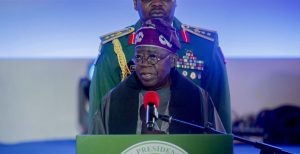
President Bola Tinubu has approved the membership of the Nigerian contingent to the newly constituted US-Nigeria Joint Working Group, a strategic platform aimed at strengthening bilateral cooperation and enhancing efforts to tackle security challenges across the country.
The approval follows agreements reached during a recent high-level engagement in Washington, DC, led by the National Security Adviser (NSA), Nuhu Ribadu.
According to a statement from the Presidency, Ribadu will lead the Nigerian side of the Joint Working Group. He will be supported by a multi-stakeholder team comprising senior officials from key security and intelligence agencies.
Members of the Joint Working Group include the Minister of Foreign Affairs, Amb. Yusuf Maitama Tuggar; Minister of Defence, Mohammed Badaru Abubakar; Minister of Interior, Hon. Olubunmi Tunji-Ojo; Minister of Humanitarian Affairs, Dr Bernard M. Doro; Chief of Defence Staff, Gen. Olufemi Oluyede; Director-General of the National Intelligence Agency, Amb. Mohammed Mohammed; and the Inspector General of Police, Kayode Egbetokun.
Also appointed to serve are Ms Idayat Hassan of the Office of the National Security Adviser (ONSA) and Mr Paul Alabi of the Embassy of Nigeria in the United States, who will jointly function as the secretariat of the group.
The Joint Working Group is expected to deepen collaboration with the United States on counterterrorism, intelligence sharing, defence support, and other security-related interventions.
The establishment of the Joint Working Group is seen as a significant step in reinforcing Nigeria’s global partnerships and enhancing the country’s capacity to address complex security threats.
President Tinubu charged members of the Joint Working Group to work diligently with their US counterparts to ensure the smooth operationalisation of agreements reached across critical sectors. He emphasised that improved collaboration with the United State remains pivotal to Nigeria’s national security objectives and broader governance reforms.
