The Democratic Party has regained control of the United States Senate after defeating Republican candidates in six states, including Texas, Ohio, North Carolina, South Carolina, Kansas and Iowa, in Tuesday’s midterm elections.
The victories ended Republican control of the upper chamber, handing Democrats a majority in the 100-member Senate and significantly changing the balance of political power in Washington.
The Associated Press (AP) projected the Democratic Party as the winner of the Senate majority, with Al Jazeera reporting on Wednesday that the party had secured at least 51 seats, enough to take control of the chamber.
The six Republican-held seats were captured by James Talarico in Texas, Sherrod Brown in Ohio, Roy Cooper in North Carolina, Annie Andrews in South Carolina, Adam Hamilton in Kansas and Josh Turek in Iowa.
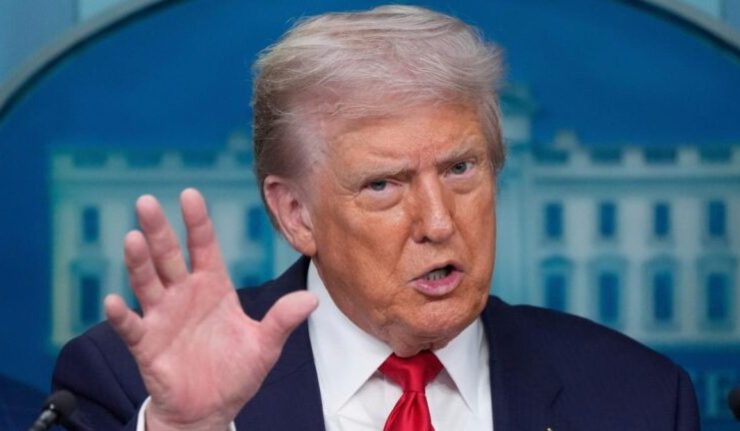
The outcome represents a setback for President Donald Trump, whose Republican Party had controlled both chambers of Congress following the 2024 elections.
With the new majority, Democrats will control Senate committees and have greater influence over legislative proceedings, federal appointments and congressional investigations into the activities of the administration.
The Democratic victories included significant breakthroughs in states where Republican candidates have traditionally enjoyed strong support in federal elections.
In Texas, Democrat James Talarico defeated Republican Ken Paxton to capture a Senate seat that had remained in Republican hands for decades. His victory marked a major breakthrough for Democrats in the state, which has not elected a Democratic senator since Lloyd Bentsen’s victory in 1988.
In Ohio, former Democratic Senator Sherrod Brown defeated Republican incumbent Jon Husted, returning to the Senate after losing his re-election bid in 2024. Brown’s victory was among the most closely watched contests, attracting substantial campaign spending and contributions from political organisations on both sides.
In North Carolina, former two-term Governor Roy Cooper defeated Republican Michael Whatley to capture the seat vacated by retiring Senator Thom Tillis.
In South Carolina, paediatrician Annie Andrews defeated Republican Darline Graham, who had been appointed to the Senate following the death of her brother, Senator Lindsey Graham. Andrews’ victory marked a significant Democratic breakthrough in a state that has traditionally favoured Republican candidates in federal elections.
In Kansas, Democrat Adam Hamilton defeated Republican incumbent Roger Marshall, while Josh Turek defeated Republican Ashley Hinson in Iowa to capture the seat vacated by retiring Senator Joni Ernst.
Turek, a state legislator and former Paralympic wheelchair basketball athlete, completed the six-seat Democratic gain.
Apart from the Republican-held seats captured by Democrats, the party also recorded victories in states where it previously held Senate seats.
In Georgia, Democratic Senator Jon Ossoff defeated Republican challenger Mike Collins to retain his seat.
Other Democratic victories included Chris Pappas in New Hampshire, Chris Coons in Delaware, Cory Booker in New Jersey, Jack Reed in Rhode Island, Edward Markey in Massachusetts, Mark Warner in Virginia and John Hickenlooper in Colorado.
In Illinois, Democrat Juliana Stratton won the open Senate seat previously held by retiring Senator Dick Durbin, while Ben Ray Luján retained his seat in New Mexico.
The victories strengthened the party’s position in the upper chamber and contributed to its return to majority control.
Reacting to the Republican losses, Trump said he was willing to accept the outcome of the midterm elections and work with Democrats following their takeover of the Senate.
In an interview with The New York Times on Tuesday night, the President was asked whether he would accept the election results.
“I am absolutely willing to accept those results”, he replied.
Trump also expressed readiness to cooperate with the opposition party despite the change in control of the chamber.
“We will work with the Democrats, and we will, you know, look forward to working with them. We’ll probably work something out”, he said.
The remarks came as election results showed significant Democratic gains in congressional and gubernatorial contests.
In a separate reaction on his Truth Social platform, Trump suggested that Republican candidates would have performed better had he personally contested the election.
“I wasn’t on the ballot, and if I was, we would have won IN A LANDSLIDE! Thank you for your attention to this matter”, he wrote.
Trump had campaigned for Republican candidates ahead of the elections, urging supporters to defend the party’s congressional majorities.
His comments followed months of campaigning in support of Republican candidates, including those contesting Senate seats in states where Democrats eventually recorded victories.
The midterm elections were contested against the backdrop of concerns over the cost of living, rising fuel prices, economic conditions and the Trump administration’s domestic and foreign policies.
The dissatisfaction with the administration’s handling of the economy and its decision to launch a war against Iran in February featured prominently in the campaign.
An exit poll conducted by SSRS on behalf of a consortium of US media organisations, including the Associated Press, found that half of voters viewed the midterm elections as an opportunity to rebuke the President.
The survey also found that three-quarters of voters were angry or dissatisfied with the direction of the country, while 70 per cent wanted Congress to provide stronger checks and balances on the President.
Following his victory in Kansas, Hamilton attributed the result to dissatisfaction with developments in Washington.
“I think the people in Kansas – Republicans, independents and Democrats – are saying what’s happening in Washington is not OK”, he stated.
In Georgia, Ossoff also criticised Trump’s leadership while addressing supporters after retaining his seat.
“In sweeping and decisive victories, the American people have rebuked the depravity, corruption and incompetence of the man named President Donald J. Trump”, he noted.
Democratic Senate leader Chuck Schumer also welcomed the results, declaring: “Five words for the American people: relief is on the way.”
Democratic Majority Alters Balance Of Power
The Democratic takeover gives the party control of Senate committees and greater authority to scrutinise the activities of the federal government through investigations and oversight hearings.
It also places Democrats in a stronger position to influence legislative proceedings and the consideration of presidential nominees to federal agencies, diplomatic positions and the judiciary.
Before the elections, Republicans controlled the Senate with 53 seats, while Democrats held 45, alongside two independent senators who caucused with them.
The November 3 midterm elections involved 35 of the Senate’s 100 seats, comprising 33 regular elections and two special elections.
All 435 seats in the House of Representatives were also contested, with the battle for control of the lower chamber continuing as votes were counted.
Republicans had secured control of both chambers of Congress following the 2024 elections, giving Trump’s administration unified control of the federal legislature. The Democratic victory in the Senate has now ended Republican control of the upper chamber, creating a new balance of power in Washington.