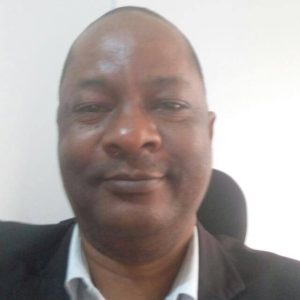
Oladiran Okunlola
We have all been witnessing the political campaigns, the poll results and declaration of winners of elections since 1999, every four-year ritual in Nigeria with The Independent Electoral Commission (INEC) as the chief organiser.
And with that yearly ritual comes the deliverance of dividends of democracy by political office holders seems to be ‘getting better’ with every electoral process.
In almost all occasions just as in the present one on held on February 25, 2023, it is the courts that finally decide the winners and the losers.
But the real question to ask and for which answers are yet to be found is this. Is there any statesman/stateswoman r among the present crop of politicians in the country?
Each politician (winner or loser) seems to be concerned with looking forward to every four years of election period after the earlier one. The level of ‘cross carpeting’ by politicians from one party after every election held in the country clearly shows lack of ideological conviction among them, which points to the fact that all Nigerian politicians come into politics for service but for business venture.
Our idealistic first republic politicians, namely, Chief Obafemi Awolowo and Sir Ahmadu Bello, respectively once said that Nigeria is a mere geographical expression, and that Nigeria is a mistake of 1914.
Whether we all like it or not, these are eternal truths from our founding fathers and until our governing elites find an enduring way to work with honesty of purpose and determination for an egalitarian society, things will continue to go from bad to worse for Nigeria.
It is not about the perceived idea that nothing is wrong with the 1999 constitution except those who practice it.
Let’s look at it in a very simple way; a baby girl born in 1999, is matured enough today to be a mother today. What benefit has accrued to Nigerians for the past 23 years of our democratization? Practically none. We revel in primitive accumulation and flaunt our wealth, which is often ill-gotten, irrespective of the social consequences to the larger society,
In a nutshell, the Nigerian elite has denied the people an enabling environment to make them become more proactive and innovative.
It was the venerable Nelson Mandela who said, ‘The world will never respect Africa until Nigeria earns that respect. The black people of the world are looking up to Nigeria to be a source of pride and confidence. Every Nigerian should be made to understand this’.
But unfortunately, Nigeria does not have a people-oriented constitution and its self-interested leaders have been unable to rise to the challenge of continental leadership by example thrust upon it by providence!
Hopefully, Nigeria has a very vibrant and promising youthful population whose creative energy government at all levels must by necessity harness positively.
The solution to the myriad of political and economic challenges facing the country lie in the capacity of the elite to summon the necessary political will to address challenges frontally and avoid the drift towards self-evident chaos and anarchy.
As a starting point, I humbly suggest that the recommendations of the Political Conference of 2014 report and the Mallam Nasir el-Rufai APC Committee report on Political Reform should be given thoughtful consideration by the t governing class.
With the pervading injustices in the land, the lack of inclusive governance, I honestly think those reports hold a refreshing perspective to relaunch Nigeria on the path of progressive development that would help her claim the deserved title ‘Giant of Africa’ thrust upon her by providence.
Mr Oladiran O. Okunlola sent in this piece from Lagos, where he works and lives.