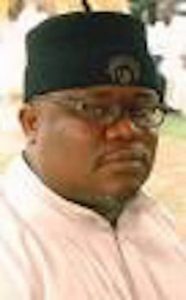
This Friday, two of Nigeria’s most respected institutions will converge in Lagos to honour one man in a manner that feels both historic and inevitable. At the venerable Lagos Country Club, Governor Hope Uzodimma of Imo State will deliver the maiden lecture in the club’s Policy Dialogue with Government Leaders series.
Hours later, at The Sun Awards, he will receive the prestigious Man of the Year Award. These are not routine recognitions but powerful, independent affirmations of a leadership style that has consistently placed national cohesion above sectional interest and measurable transformation above empty rhetoric.
In a country still wrestling with the tensions of diversity, the dual honour stands out as an unprecedented endorsement of Uzodimma’s quiet but resolute nationalism and his proven capacity to unify rather than divide. The Lagos Country Club, a 77-year-old institution rooted in elite civic engagement, did not choose him by accident.
The Sun Newspapers, long known for its rigorous assessment of public performance, did not bestow its highest individual honour lightly. Together, these platforms signal that the model of governance Uzodimma has practised in Imo State offers Nigeria a practical pathway toward shared prosperity and genuine national integration for the future.
The theme of the Lagos Country Club dialogue could not be more fitting: “The Future is Local: Stimulating Grassroots Economies for Inclusive Growth.” It is a subject Uzodimma has lived rather than merely lectured about. From the moment he assumed office, he recognised that Nigeria’s federal structure would only deliver if sub-national governments stopped waiting for Abuja and began building productive capacity from the community upward. In Imo, this philosophy has translated into concrete outcomes.
Major arterial roads that once symbolised isolation, such as the Owerri-Orlu corridor, the Owerri-Okigwe dualisation, the Owerri-Umuahia axis, have been transformed into arteries of commerce. The Assumpta Twin Flyover has rewritten Owerri’s skyline and eased the daily friction of urban life. Rural communities that previously measured progress in seasons of neglect now count new access roads, improved markets, and restored dignity.
And these are not vanity projects. They are the physical expression of a deeper conviction that inclusive growth begins where people actually live. The ongoing Oguta Lake dredging initiative, aimed at opening a pathway to the Atlantic, and the Orashi Power Plant reflect the same logic. Uzodimma understands energy and logistics as the oxygen of local enterprise. By investing in them, he is not merely lighting homes but creating the conditions for private capital, small businesses, and young entrepreneurs to thrive without constant dependence on the centre and generators. When the Lagos Country Club invites him to speak as the inaugural voice in its Policy Dialogue series, it is acknowledging that this grassroots-first approach has national relevance. In a federation still debating the balance between central authority and state initiative, Imo under Uzodimma has become a working laboratory.
The Sun Man of the Year Award carries an even broader significance. The newspaper’s editors and reporters did not base their decision on press releases or photo opportunities. They examined infrastructure delivery, digital technology initiatives, healthcare upgrades, education investments, energy projects, and human capital development. They noted the robotic and oncology facilities at Umuguma Specialist Hospital, the systematic road revolution across the three senatorial zones, the Skill-Up Imo programme that has equipped tens of thousands of young people with digital competencies, and the tangible improvement in the state’s fiscal health through rising internally generated revenue and reduced debt. This is the second major recognition from The Sun, following the Governor of the Year honour in 2021. The progression from early-term acknowledgement to Man of the Year in 2026 tells a story of sustained performance rather than a single burst of activity.
What elevates both honours beyond administrative competence is the nationalist character of Uzodimma’s leadership. In a political culture often tempted by ethnic calculations, he has consistently chosen inclusion. His public messaging has rejected the language of grievance and separatism in favour of the harder, more productive work of building within a united country. He has argued, both by word and by deed, that the Igbo interest is best advanced not through isolation but through competitive excellence inside a functional federation. This stance has not always been fashionable in every corner of the Southeast, yet it has proven strategically sound. As Chairman of the Progressive Governors Forum, he has used his platform to strengthen inter-state collaboration and to project a progressive, development-oriented face of governance that transcends regional boundaries.
Also, nationalism, properly understood, is not the loud assertion of difference. It is the disciplined commitment to a common project larger than any single group. Uzodimma’s version is practical. It builds roads that connect markets across ethnic lines. It trains young people whose skills are portable anywhere in Nigeria and beyond. It restores security so that citizens of every background can pursue opportunity without fear. It expands healthcare and education so that talent is not wasted by geography or circumstance. These are unifying acts that shrink the space in which divisive narratives thrive.
The timing of Friday’s dual recognition is itself instructive. Nigeria continues to navigate complex economic reforms and political transitions. In such moments, the country needs exemplars who demonstrate that sub-national leadership can be both ambitious and responsible, both local in focus and national in outlook. By selecting Uzodimma as the voice to inaugurate a serious policy conversation at the Lagos Country Club and by crowning him Man of the Year, these institutions are saying that competence and cohesion are not competing values but mutually reinforcing.
However, critics will always exist. In Nigerian politics, no performance is ever immune to partisan reinterpretation. Still, the cumulative evidence is difficult to dismiss. Roads that were once seasonal tracks are now all-weather arteries. Hospitals that offered limited options now house specialised facilities. Young people who once measured opportunity only in migration are acquiring skills that keep them productive at home or competitive abroad. The state’s fiscal position has improved. Security, once a daily source of anxiety, has stabilised enough for development to regain momentum. These outcomes did not appear by accident. They are the product of prioritisation, persistence, and a governing philosophy that treats public office as a trust.
The Lagos Country Club’s decision to open its new dialogue series with Uzodimma is particularly revealing. The club is not a political party appendage. It is a longstanding institution of Lagos’s professional and business elite. It is better understood that a policy dialogue is not a political party campaign rally but a room where ideas are tested, where questions are asked and answered, and where a governor is expected to explain his thinking to people who have the expertise and standing to challenge it. Being invited to give a maiden lecture in such a forum signals that Uzodimma’s contribution is taken seriously by people who think about governance for a living. When such a body seeks insight on stimulating grassroots economies, it looks for practitioners rather than theorists. Here, Uzodimma is a practitioner, and his record supplies the evidence. His administration’s emphasis on community-driven initiatives, enterprise creation, and the expansion of local productive capacity aligns with the theme the club has chosen. The invitation is therefore both a platform and a validation of the ideas being tested in Imo State. It confirms that those ideas are considered worthy of national conversation.
Equally, The Sun’s Man of the Year Award carries the weight of independent journalism. Newspapers of record do not lightly bestow such titles. When they do, after systematic review, the recognition becomes part of the historical record of performance. That the same newspaper that honoured him early in his tenure has now elevated him further suggests that the trajectory has been sustained. Consistency is rare in public life, and The Sun shows that Uzodima has been consistent with his transformational ideals. That deserves to be marked. No doubt, awards of this kind are sometimes dismissed as ceremonial. However, they reflect how a leader’s peers, journalists and public observers weigh his record. To be named Man of the Year is to be placed, however briefly, in a national conversation about what good leadership looks like. For Uzodimma, that conversation is anchored in a record that has drawn attention beyond Imo’s borders. For instance, in July 2026, the Presidency publicly commended him for the scale and quality of infrastructure development across the state, describing the projects as evidence of purposeful leadership and effective collaboration with the federal government.
Friday’s events will therefore be more than ceremonial. They will serve as a public affirmation that transformational leadership at the state level still matters, that nationalism expressed through inclusive development still resonates, and that unity is advanced most effectively by leaders who deliver results rather than merely demand loyalty. For the people of Imo State, the dual honour is a source of legitimate pride. For Nigeria, it is a reminder that the path to a more cohesive and prosperous national future runs through competent, forward-looking governance at every level.
It must be noted that Uzodimma did not invent the challenges facing Imo or Nigeria. He inherited them, confronted them systematically, and produced measurable progress. In doing so, he has offered a model that prioritises the local without abandoning the national, that builds infrastructure without neglecting human capital, and that practises politics without surrendering to the politics of division. The Lagos Country Club and The Sun Newspapers have taken notice. Their independent endorsements on the same day constitute one of the clearest signals yet that this style of leadership is both effective and necessary.
As he steps to the podium this Friday and later receives the Man of the Year Award, Uzodimma will not merely be collecting personal accolades but standing as living proof that a governor who governs with competence, inclusion, and national purpose can still command respect across Nigeria’s complex political landscape. In a season when many voices compete to define the country’s direction, these two institutions have chosen to amplify a message of delivery, unity, and hope grounded in results. That is an endorsement worth celebrating, and a standard worth emulating.