

By Ayo Kehinde
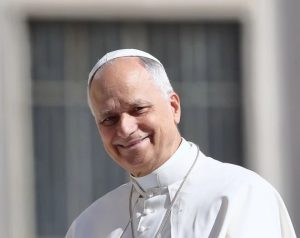
Pope Leo XIV on Monday told world leaders to “stop feeding wars and feed the hungry,” warning that rising global militarisation is worsening hunger and deepening humanitarian crises across the world.
Speaking during a visit to the Rome headquarters of the World Food Programme, the pontiff said the world was witnessing a dangerous imbalance in political decision-making, where wars are “fed” more readily than people are nourished.
“Conflicts are ‘fed’ more readily than people are nourished,” said Pope Leo, the first US-born pope, in a speech that sharply criticised global spending priorities and the growing militarisation of international affairs.
He warned that the trend reflects not just administrative inefficiencies but a deeper moral and political failure among world leaders.
“This reality reflects not only operational shortcomings but also a fundamental imbalance in political and moral priorities,” he said.
Pope Leo XIV expressed concern that countries are increasingly diverting resources toward defence, internal stability, and economic competition, while allowing hunger and humanitarian crises to slip down the global agenda.
He said such priorities undermine multilateral cooperation and weaken global responses to crises affecting millions of vulnerable people.
“Countries have increasingly allocated their resources toward national security, economic growth and domestic stability, disregarding the close link between these issues and multilateral cooperation,” the pontiff said.
Reaffirming the Vatican’s stance on humanitarian justice, Pope Leo declared that access to food must be treated as a fundamental human right rooted in human dignity.
“Access to food is a fundamental human right grounded in the dignity of every person,” he said, stressing that hunger should never be normalised in a world of abundant resources.
He further argued that addressing food insecurity is not only a moral duty but also a strategic necessity, noting that hunger often fuels instability, displacement, and conflict.
“Food security is an essential component of global and integral security,” he added.
The World Food Programme remains the world’s largest food aid provider, yet continues to operate under intense funding pressure as global crises multiply.
The agency reportedly delivered 15.6 billion daily rations to 121 million people in 2025, supported by about $6.5 billion in private donations, even as rising conflicts and climate shocks strain global supply chains.
Its largest donor, the United States, recently announced an $800 million contribution after earlier reductions in aid allocations under former President Donald Trump, which had significantly reduced planned humanitarian funding.
Pope Leo was received at the WFP headquarters by Cindy McCain, who stepped down earlier this year due to health reasons.
The WFP, which received the Nobel Peace Prize in 2020, continues to warn that global hunger levels remain dangerously high due to a combination of conflict, economic instability, and funding shortfalls.
The pontiff urged world leaders to re-evaluate their priorities and strengthen international cooperation to address hunger and inequality, warning that continued neglect of food insecurity could worsen global instability.
He stressed that investing in food systems is essential to preventing conflict and building long-term peace.
“Alleviating hunger not only helps those in need but also addresses underlying causes of geopolitical instability,” he said.
