

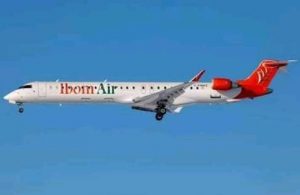
The Akwa Ibom State-owned airline, Ibom Air, has issued a stark warning over the escalating cost of aviation fuel, signalling possible flight reductions if urgent action is not taken.
In a statement released on Monday, the airline described the situation as an “unprecedented crisis,” revealing that the cost of fueling its aircraft has jumped from an average of ₦2.1 million per flight in January to about ₦7.6 million as of April 27, an increase of more than 350 percent within seven weeks.
Endorsed by Aniekan Essienette, Group Manager, Marketing and Communication, the release warned that the sustained spike in fuel prices is eroding its ability to maintain normal operations, despite efforts to absorb rising costs without significantly increasing ticket fares.
“At this point, domestic airlines are baffled at why the price of aviation fuel in Nigeria has ballooned to this level, far above global benchmarks”, the statement said.
Ibom Air pointed to structural concerns in the supply chain, noting that more than 95 percent of aviation fuel consumed locally is sourced from the Dangote Refinery, yet prices remain disproportionately high.
The airline said it had initially absorbed the financial shock in anticipation that the surge would be temporary. However, nearly two months on, with prices continuing to rise, it warned that the business model is becoming unsustainable.
“Airlines cannot continue to operate simply to pay for fuel and nothing else”, it added.
Ibom Air cautioned that, like its global counterparts facing cost pressures, it may be forced to take “ameliorating actions”, including cutting flight capacity in the coming days to stay afloat.
The airline also issued a direct appeal to fuel marketers to reconsider current pricing, warning that failure to address the situation could further destabilise Nigeria’s domestic aviation industry.
The development raises concerns about possible disruptions to air travel, as operators struggle to cope with mounting operational losses driven by soaring fuel costs.
