

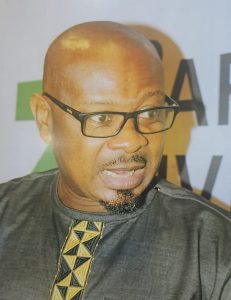
The operational visit of Inspector-General of the Nigeria Police Force, Olatunji Disu Tunji Disu to the Imo Police Command on 24 September 2026 was an important opportunity to assess the security situation in the state and reinforce professionalism, intelligence-led policing and partnership between the police and the communities they serve.
The IGP reportedly emphasised discipline, integrity, respect for members of the public, intelligence gathering and community engagement. These are important commitments. But Imo State also presents a particularly important test of what those principles mean in practice.
The visit should have provided an opportunity for transparent engagement with some of the persistent accountability and security concerns that have undermined public confidence in policing in the state.
First is the legacy of the notorious Tiger Base.
The decision of the Imo State Commissioner of Police in May 2026 to disband the Anti-Kidnapping Unit popularly known as Tiger Base, alongside other tactical formations, and establish the Violent Crime Response Unit (VCRU) was an important institutional response to longstanding complaints.
But disbandment cannot, by itself, amount to accountability.
Serious allegations previously made against personnel associated with Tiger Base—including unlawful arrests and detention, torture and other ill-treatment, extortion, disappearances and other abuses—should not disappear merely because a unit has been disbanded or renamed.
Where credible allegations exist, they should be independently investigated. Victims and families deserve to know the outcomes. Officers against whom allegations are substantiated should face appropriate disciplinary or criminal processes.
The IGP’s visit offered an opportunity to tell the people of Imo State what has happened to outstanding complaints and what safeguards have been introduced to ensure that the VCRU does not inherit the practices attributed to the formations it replaced.
Another issue requiring attention is the security and treatment of students around the Nekede-Ihiagwa-FUTO axis.
RULAAC has received and raised complaints concerning alleged harassment, profiling and extortion of students and other young people by some police personnel operating around these communities.
At the same time, students and residents face a genuine threat from kidnapping and other violent criminality.
These two problems must not be treated as alternatives.
Students should not have to choose between fear of criminal gangs and fear of those deployed to protect them.
The appropriate response is professional, intelligence-led policing capable of identifying and dismantling kidnapping, armed robbery and other organised criminal networks—not indiscriminate profiling, harassment, arbitrary searches or extortion of young people.
There is a wider issue.
The police have a legitimate and difficult responsibility to confront organised armed attacks, kidnapping and other serious crimes in Imo State and across the South-East. They should be adequately equipped, trained and supported to discharge that responsibility effectively.
But insecurity must not become a justification for the securitisation of civic space.
Intelligence-led policing should distinguish armed actors from peaceful citizens, journalists, human rights defenders, political actors and communities exercising constitutionally protected freedoms. Security operations must remain within the law and should not criminalise dissent, peaceful assembly or legitimate civic and political activity.
The IGP’s visit to Imo did not occur in isolation.
Only the previous day, 23 September, police representatives joined civil society and other stakeholders in Owerri for a One-Day Focused Closed-Door Accountability Dialogue on Civic Space in South-East Nigeria.
The dialogue was convened by the Rule of Law and Accountability Advocacy Centre (RULAAC), Virgin Heart Foundation (VHF), Vivacious Development Initiative (VIDI) and Action Group on Free Civic Space (AGFCS), with support from the Fund for Global Human Rights, as part of the 12-month regional project, “From Silencing to Accountability: Challenging the Securitization of Civic Space in South East Nigeria.”
The project covers Abia, Imo, Anambra, Enugu and Ebonyi States.
Significantly, the Abia State Police Command publicly acknowledged its participation in the dialogue and described the engagement as an opportunity to strengthen constructive engagement and accountability at the intersection of security operations and constitutionally guaranteed civic rights.
DSP Maureen Chioma Chinaka, the Abia State Police Public Relations Officer, represented the Command and participated in the panel, “Security, Civic Freedom and Accountability: Closing the Gaps from Arrest to Remedy.”
The dialogue brought together representatives of the Nigeria Police Force, National Human Rights Commission, Judiciary, pro bono lawyers, civil society, journalists, community representatives, persons with disabilities and individuals with reported experiences of civic-space violations.
It was deliberately designed not as an adversarial encounter with the police, but as a solution-driven conversation: acknowledging the genuine security problems confronting the South-East while asking how law enforcement can respond effectively without sacrificing human rights, due process and public accountability.
The Abia Police Command’s own account of the engagement emphasised sustained dialogue, mutual trust, collaborative problem-solving, intelligence-led policing and respect for human rights.
Those principles closely mirror the message delivered by IGP Disu in Owerri the following day.
That convergence should not be lost.
The conversation also continued in Anambra State, where the African Youths Initiative on Crime Prevention (AYICRIP), with support from the Fund for Global Human Rights through the Action Group on Free Civic Space, organised an Anambra State Police-Youth Crime Prevention Dialogue at Nnamdi Azikiwe University, Awka, in response to concerns about police brutality and negative profiling of young people in the South-East.
The engagement brought students face-to-face with senior representatives of the Anambra State Police Command. Students were able to raise difficult questions about their experiences and concerns, while the police responded and made commitments around improving relations with young people and strengthening trust and partnership for effective policing.
Taken together, these engagements point towards something potentially significant.
Within a matter of days, civil society organisations, students, communities and police representatives in different South-East states were discussing essentially the same question that IGP Disu raised during his Imo visit:
How do we build effective policing based on trust and community partnership?
The answer cannot simply be more meetings or declarations of commitment.
Trust is built when complaints are investigated.
It grows when officers accused of misconduct are subjected to credible processes.
It grows when victims obtain remedies.
It grows when students can report police extortion without fear of retaliation.
It grows when police respond effectively to kidnapping without indiscriminately profiling young people.
And it grows when communities can criticise security agencies, organise, protest, report abuses and participate in public affairs without being treated as security threats.
The IGP’s call for professionalism, integrity, community engagement and respect for members of the public is therefore welcome. But the real test will be whether those commitments produce measurable institutional changes.
RULAAC believes the current moment presents an opportunity for the Nigeria Police Force to deepen this emerging police-civil society engagement across the South-East.
Among the practical steps that deserve consideration are:
• a transparent review of outstanding allegations associated with Tiger Base and other tactical formations in Imo State;
• disclosure, within lawful limits, of the status and outcomes of credible complaints and investigations;
• strong supervision and human-rights safeguards for the VCRU and other tactical units;
• investigation of complaints of harassment, profiling and extortion involving students and young people around Nekede, Ihiagwa, FUTO and other locations;
• sustained intelligence-led operations against kidnapping and organised violent crime threatening students and communities;
• accessible and effective complaint and remedy mechanisms for citizens alleging police misconduct;
• structured police-youth and police-civil society dialogues across the five South-East states, with agreed commitments and mechanisms for monitoring implementation; and
• clear operational safeguards ensuring that counter-insurgency, anti-kidnapping and other security operations do not result in the securitisation of civic space.
The emerging engagements in Owerri and Awka demonstrate that constructive dialogue between the police and citizens is possible.
But dialogue must lead somewhere.
IGP Disu has spoken about mutual trust and sustained partnership between the police and communities. The South-East now offers an opportunity to translate those words into an accountability framework that can be measured by what citizens actually experience.
Police reform is ultimately measured not by the disbandment or renaming of units, official communiqués or the number of stakeholder meetings held.
It is measured by whether abuses decline, complaints are investigated, perpetrators are held accountable, victims obtain remedies, violent criminal networks are disrupted, communities become safer, civic freedoms remain protected—and citizens can encounter the police without fear.
Okechukwu Nwanguma is the Executive Director of RULAAC
