As the global community marks World Press Freedom Day 2026 under the theme Press Freedom for a Better Future, the evidence from Nigeria commands not reflection but action. A free press is not a peripheral amenity. It is the connective tissue of accountable democracy.
And across Nigeria in recent months — through assault and arrest, through regulatory cacophony and judicial inconsistency, through surveillance infrastructure and silencing rhetoric — that connective tissue has been under sustained, deliberate attack.
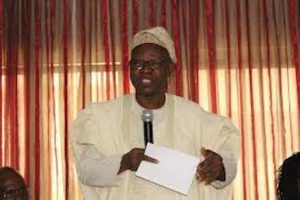
Marking the occasion, Dr. Akin Akingbulu, Executive Director of the Centre for Media and Society (CEMESO), issued a challenge to all with the power to act: “A democracy that does not protect its journalists does not, in any meaningful sense, protect its citizens. Journalists are not abstractions — they are the people who record power, hold governments accountable, and deliver to communities the information they need to make decisions about their own lives.
On this World Press Freedom Day, we are standing with every journalist who has been beaten, detained, threatened, or silenced — and demanding that impunity, for attackers in uniform and in office alike, be replaced with accountability under law.”
The pattern of violence is neither incidental nor new. Nigeria’s monitoring data shows documented attacks on journalists have increased by 40% over the past four years, with 74% of recorded incidents attributed to state security agencies — a figure that indicts not rogue individuals but institutional cultures of impunity.
In Bauchi, a journalist covering Eid Durbar celebrations was beaten with sticks by police, sustaining profuse head injuries. In Port Harcourt, a reporter was set upon by a mob of over 17 thugs.
In Katsina, a journalist and a civil society accountability officer were brutally assaulted by urban gangs. Each of these incidents, taken alone, might be dismissed as isolated. Taken together, they describe a consolidating pattern: the press in Nigeria operates in conditions of documented, recurring physical danger.
The political environment has compounded these pressures. Politicised ownership and management are spawning the use of media as tools for pushing a political agenda and enforcing self-censorship in newsrooms.
Beyond the foregoing spheres, Nigeria’s digital rights landscape has deteriorated measurably. The country has been identified as Africa’s largest consumer of mass surveillance technology, with cumulative investment exceeding $470 million in facial recognition and tracking infrastructure — deployed without any comprehensive legal framework governing its use, oversight, or judicial authorisation. Section 24 of the Cybercrimes Act continues to be wielded against bloggers, journalists, and digital commentators whose offence is political criticism rather than criminal conduct.
Nigeria has fallen in Africa’s Digital Rights Score Index, trailing regional peers on infrastructure, legal protections, and civic freedoms. The 2021 suspension of Twitter — now being publicly defended as a national security necessity — stands as the clearest expression of a state prepared to weaponise digital infrastructure against its own public.
These pressures carry acute consequences for the 2027 general elections. The Independent National Electoral Commission has formally identified misinformation amplified as the “greatest threat” to the integrity of the coming polls.
Deepfake audio and video technologies have reached near-indistinguishable quality, threatening to overwhelm newsrooms already stretched thin by economic pressure and editorial capture. Nigeria’s monitoring data suggests that 42% of national news outlets have been weakened by media capture — their independence compromised by ownership interests with political relationships. A media environment unable to report freely cannot serve as the democratic safeguard the electorate requires.
Against this, the courts have offered a counter narrative that matters. The Federal High Court in Warri has affirmed the constitutional right of citizens to record police officers in the performance of their duties. A cybercrime prosecution used to suppress a rights activist for years was ultimately dismissed, with the activist’s passport ordered returned.
A Lagos High Court applied Nigeria’s data protection legislation to hold a global technology company accountable for publishing false and damaging information about a citizen. Nigerian lawmakers are now moving to amend the Cybercrimes Act to introduce protections for journalists.
These are not ceremonial victories. They are demonstrations that the constitutional architecture of rights retains real force — when invoked, when defended, and when the courts choose to act on it. The challenge is to make protection the norm, not the exception.
Nigeria’s journalists and media institutions deserve recognition that goes beyond the ritual of annual observance. In a country where the Naira’s prolonged depreciation has driven the cost of newsprint, bandwidth, broadcast equipment, and basic operational survival to levels that would have seemed unimaginable a decade ago, the Nigerian press has refused to fold.
Correspondents continue to file from conflict zones on equipment they cannot afford to replace. Editors hold the line on standards in newsrooms where salaries arrive late, if at all. Community radio stations stay on air despite the punishing cost of fuel for generators that substitute for a power grid that has never delivered. Independent digital outlets publish daily without the advertising base that once made independent journalism economically viable.
This is not mere professional duty — it is a form of democratic courage that deserves to be named as such. On this World Press Freedom Day, we salute every Nigerian media practitioner who has chosen, under extraordinary economic duress, to keep the public informed. Their resilience is not incidental to Nigeria’s democracy. It is one of the pillars holding it upright.
On this World Press Freedom Day, the following demands are issued to those with the power and responsibility to act.
-
The Federal and State Governments must investigate and prosecute all documented attacks on journalists, including those involving state security personnel, issue formal sanctions against executive officials who threaten media workers, introduce comprehensive legislation governing surveillance technology deployment with mandatory judicial oversight, and formally caution all members of the executive that hostile rhetoric directed at the press carries consequences.
-
The National Assembly must expedite the amendment of Section 24 of the Cybercrimes Act to include robust public interest defences and eliminate its use as an instrument of arbitrary detention, review the National Broadcasting Commission (NBC) Act to provide for robust architecture for media freedom and scrutinise NBC regulatory decisions to ensure enforcement reflects broadcast standards and not political convenience.
-
Media organisations and the private sector must invest in journalist safety training, secure communications, and rapid welfare support for practitioners injured in the line of duty, strengthen internal fact-checking capacity to reduce the pretext for state-led regulatory interventions ahead of 2027, and disclose ownership structures so that editorial independence can be assessed by the public and civil society.
-
Civil society and international partners must establish and sustain an independent Media Innovation Fund, insulated from government and corporate interference, to support investigative journalism and digital infrastructure, develop joint verification standards adequate to the deepfake threat ahead of the 2027 elections, and maintain coordinated rapid-response mechanisms for defending journalists under attack and holding perpetrators accountable.
Dr. Akingbulu’s closing message was addressed to journalists, citizens, and institutions in equal measure: “Press freedom is not won once and kept forever. It is defended, every day, by journalists who choose to report despite the risk, by courts that choose to uphold the constitution, by civil society that refuses to normalise impunity, and by citizens who insist on their right to know. Nigeria has the democratic architecture to protect its press.
What this World Press Freedom Day must mark is the moment that architecture is finally made to function — for every journalist in the field, every editor under pressure, and every citizen who depends on the truth.”