By Ayo Kehinde
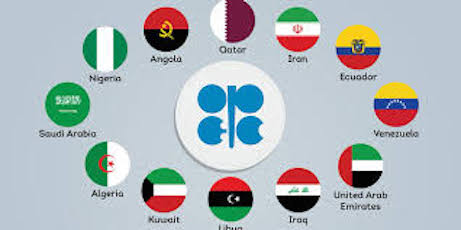
The United Arab Emirates on Tuesday announced its withdrawal from the Organisation of Petroleum Exporting Countries (OPEC) and the wider OPEC+ alliance effective May 1, in a major development that underscores deepening tensions with Saudi Arabia over oil production limits, regional influence, and economic competition in the Gulf.
The decision, announced through the UAE state-run WAM news agency, comes after prolonged disagreements within the oil alliance over production quotas and growing frustration in Abu Dhabi over restrictions that officials believe have constrained the country’s expanding production capacity.
“This decision reflects the UAE’s long-term strategic and economic vision and evolving energy profile, including accelerated investment in domestic energy production, and reinforces its commitment to a responsible, reliable, and forward-looking role in global energy markets,” the statement said.
The Emirati government added that despite leaving OPEC and OPEC+, it would continue to act cautiously in global energy markets by increasing production “in a gradual and measured manner” based on demand and prevailing market conditions.
The withdrawal marks a historic break for the UAE, which has been associated with OPEC since 1967 through Abu Dhabi before formally joining as part of the federation following the creation of the United Arab Emirates in 1971.
Industry analysts say the move reflects mounting friction between Abu Dhabi and Riyadh, two Gulf powers that have increasingly found themselves at odds despite years of close strategic cooperation.
At the centre of the disagreement has been the UAE’s longstanding dissatisfaction with OPEC+ production caps, which officials in Abu Dhabi reportedly viewed as unfair given the country’s heavy investments aimed at significantly expanding its oil production capacity.
The UAE has invested billions of dollars to boost output and has repeatedly pushed for higher production baselines within OPEC+, while Saudi Arabia has remained firmly committed to tighter controls designed to support global crude prices.
Saudi Arabia, regarded as the dominant force within OPEC, has traditionally wielded enormous influence over the cartel’s production policies.
However, the UAE’s growing economic ambitions and increasingly assertive foreign policy have strained that relationship.
The rivalry between both countries has extended beyond oil policy into broader economic and geopolitical competition across the Middle East.
Under Crown Prince Mohammed bin Salman, Saudi Arabia has aggressively pursued reforms intended to transform the kingdom into a regional business and investment hub, directly challenging Dubai’s longstanding dominance as the Gulf’s commercial centre.
In recent years, Saudi authorities have pressured multinational companies to relocate regional headquarters to Riyadh, a move widely interpreted as an attempt to weaken the UAE’s economic influence.
Differences have also emerged over regional conflicts and strategic interests, particularly in Yemen and the Red Sea corridor.
Although both countries jointly led a military coalition against Yemen’s Iran-backed Houthi rebels beginning in 2015, relations reportedly deteriorated over competing interests involving southern Yemeni separatist groups supported by the UAE.
Tensions escalated further after Saudi Arabia reportedly carried out strikes against what it described as arms shipments intended for UAE-backed separatist forces.
The growing strain has also affected media and business operations within the Gulf, with several Saudi-linked broadcasters and corporations scaling back operations in Dubai in favour of relocating to Saudi Arabia.
The wider OPEC+ group, which includes Russia and other allied oil-producing nations, was formed to coordinate supply levels and prevent sharp instability in global crude markets.