

By Ayo Kehinde
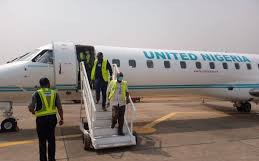
A surge in bird strike incidents involving United Nigeria Airlines (UNA) has sparked fresh safety concerns within Nigeria’s aviation sector, after the airline confirmed that three of its aircraft were grounded within 48 hours due to repeated collisions with birds.
The airline, in a statement issued Friday by its Public Relations Officer, Chibuike Uloka, disclosed that the most recent incident occurred on Thursday at Benin Airport.
The affected aircraft, an Embraer 190 operating Flight UN0561 from Benin to Abuja, sustained damage to its Nose Landing Gear and was immediately withdrawn from service.
Uloka revealed that the incident was the third recorded within a 48-hour window, bringing into sharp focus what the airline described as a disturbing and “extremely concerning and unacceptable pattern.” In total, the airline said it has recorded seven such incidents since January 7, underscoring the growing frequency of bird strikes affecting its operations.
Bird strike, a collision between birds and aircraft, occurs most commonly during takeoff and landing at low altitudes and is known to cause significant damage to engines, windshields, and critical airframe components.
While such incidents are not uncommon globally, the clustering of multiple damaging strikes within a short period has raised red flags among industry observers.
Significantly, UNA noted that it only reports bird strike incidents that result in aircraft being grounded due to damage, implying that the total number of encounters may be higher than publicly disclosed.
This has intensified concerns about the scale of the threat and the adequacy of existing mitigation measures at Nigerian airports.
The airline appealed to the Federal Airports Authority of Nigeria (FAAN) to urgently strengthen wildlife hazard management systems across major airports. It warned that the rising frequency of such incidents poses a serious risk to safety and operational stability.
Aviation stakeholders say the development points to deeper systemic issues, including poor environmental control around airport vicinities, ineffective bird deterrent systems, and lapses in runway and perimeter management.
Experts argue that without immediate and coordinated intervention, the trend could escalate into a broader safety challenge for the industry.
Beyond safety implications, the incidents have also disrupted flight schedules, affecting passengers and increasing operational costs for the airline.
Despite this, United Nigeria Airlines reiterated that its decision to ground affected aircraft reflects a strict adherence to safety standards, stressing that passenger safety will not be compromised under any circumstances.
The airline apologised to passengers for the inconvenience caused by the disruptions, noting that the measures taken were necessary to ensure continued airworthiness and compliance with aviation regulations.
