

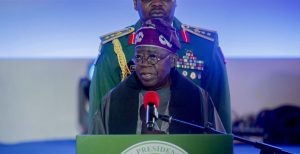
President Bola Tinubu on Friday signed into law the 2026 Appropriation Act, approving an aggregate expenditure of ₦68.32 trillion, in a move seen as reinforcing fiscal stability, accelerating infrastructure development, and sustaining economic reforms under his administration’s Renewed Hope Agenda.
The President also signed into law the Appropriation (Repeal and Enactment) (Amendment) Bill, 2026, extending the implementation period of the capital component of the 2025 budget from March 31, 2026, to June 30, 2026.
A statement signed by his Special Adviser on Information and Strategy, Bayo Onanuga, said the extension is designed to ensure the full utilisation of funds earmarked for key infrastructure and development projects nearing completion across the country.
A breakdown of the 2026 budget shows that ₦4.799 trillion has been allocated for statutory transfers, while ₦15.8 trillion is earmarked for debt servicing obligations.
Recurrent (non-debt) expenditure stands at ₦15.4 trillion, while a substantial ₦32.2 trillion has been devoted to capital expenditure through the Development Fund.
Notably, capital spending accounts for approximately 50 per cent of the total budget size, a significant indicator of the administration’s focus on long-term economic growth drivers such as infrastructure, security, and productivity-enhancing investments.
Analysts say this capital-heavy structure reflects a deliberate policy shift towards stimulating inclusive growth and addressing critical deficits in transportation, energy, housing, and public services.
The budget framework is also structured to strike a strategic balance between meeting statutory obligations, managing debt commitments, funding recurrent government operations, and sustaining capital investments that directly impact citizens’ quality of life.
With the 2026 Appropriation Act taking effect from April 1, the Federal Government is set to commence full-scale implementation, aligning spending priorities with the Renewed Hope Agenda.
The administration has reiterated its commitment to deploying public resources in a manner that promotes transparency, efficiency, and measurable outcomes.
President Tinubu has directed all Ministries, Departments, and Agencies (MDAs) to ensure disciplined budget execution, with a strong emphasis on value for money, accountability, and timely delivery of projects.
The directive underscores ongoing efforts to strengthen public financial management systems and eliminate waste in government spending.
The extension of the 2025 capital budget implementation window is expected to play a critical role in improving project completion rates nationwide.
By allowing MDAs additional time, the government aims to consolidate ongoing works, prevent cost escalations due to project abandonment, and maximise returns on already committed public funds.
The President commended the leadership and members of the National Assembly for their diligence and patriotism in the swift consideration and passage of the budget.
He emphasised that sustained collaboration between the executive and legislative arms remains essential for advancing Nigeria’s development objectives.
Reaffirming his administration’s economic direction, Tinubu assured Nigerians of continued efforts to deepen fiscal reforms, expand revenue generation, and prioritise investments that stimulate economic growth and job creation.
He also highlighted plans to strengthen social protection frameworks aimed at cushioning vulnerable populations amid ongoing economic adjustments.
