
From Victor Osula, Abuja
The Senate, on Tuesday, approved President Bola Tinubu’s request to deploy Nigerian troops to the Republic of Benin, endorsing a regional security mission aimed at stabilising the neighbouring country after last weekend’s attempted military takeover.
Senate President Godswill Akpabio announced the approval during plenary after lawmakers unanimously endorsed the President’s letter in the Committee of the Whole, in accordance with Section 5, Part II of the 1999 Constitution. The resolution grants Tinubu full parliamentary backing to commit Nigerian forces to the ECOWAS-led intervention.
Akpabio described the decision as necessary to safeguard regional stability, warning that political turmoil in any neighbouring state poses direct risks to Nigeria and the wider West African sub-region.
“An injury to one is an injury to all”, he declared, affirming Nigeria’s obligations under the ECOWAS security architecture.
President Tinubu had urged the Senate to approve the deployment, saying Nigeria bears a “historic responsibility” to support Benin under existing ECOWAS security arrangements. He stressed that urgent external intervention was required to prevent a further deterioration of the political situation.
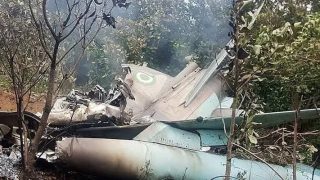
The attempted coup unfolded on Sunday when soldiers identifying themselves as members of a “Military Committee for Refoundation” briefly appeared on national television to announce the removal of President Patrice Talon. Loyalist forces, however, quickly regained control, with sources close to the presidency assuring that the capital, Cotonou, and the rest of the country were “completely secure”.
Following the incident, ECOWAS immediately activated its standby force.
“After consultations among members of the Mediation and Security Council at the level of Heads of State and Government, the Chair of the ECOWAS Authority has ordered the deployment of elements of the ECOWAS Standby Force to the Republic of Benin with immediate effect”, the bloc said in a statement.
The contingent will include troops from Nigeria, Sierra Leone, Côte d’Ivoire and Ghana. It is mandated to support the Beninese government and its Republican Army in preserving constitutional order and protecting national sovereignty.
Meanwhile, ECOWAS has declared a state of emergency across West Africa, warning that the region is facing its most severe security and political crisis in years.
ECOWAS Commission President, Dr Omar Touray, announced at the 55th Session of the Mediation and Security Council at the ministerial level in Abuja, warned that West Africa had entered a period of heightened vulnerability marked by persistent coups, contested elections, terrorism, and deepening geopolitical tension.
Touray noted that analyses before the Council showed that most member states currently fall under a “high-risk” category.
“The events of recent weeks have shown the imperative of serious introspection on the future of our democracy and the urgent need to invest in the security of our community”, he said.
Touray listed a string of destabilising factors, including the attempted coup in Benin, the recent crisis in Guinea-Bissau, prolonged political transitions, rising political exclusion, and the expanding operations of terrorist and criminal networks across borders.
He further highlighted the worsening humanitarian situation, revealing that as of October 2025, at least 7.6 million people were forcibly displaced across the region, including 6.5 million internally displaced persons. Nigeria, Burkina Faso, Niger and Mali account for the largest share.
Touray urged member states to take urgent and coordinated action:
“Faced with this situation, Excellencies, it is safe to declare that our community is in a state of emergency.”
Chair of the Council of Ministers and Sierra Leone’s Minister of Foreign Affairs, Timothy Kabba, also called for strong and decisive measures to safeguard democracy in the region.
He described the attempted coup in Benin and the crisis in Guinea-Bissau as “sobering reminders of the fragility of our democratic gains”, and recounted his recent visit to Guinea-Bissau to engage with its military leadership following the turmoil.
“Our people no longer have patience for commitments that remain unfulfilled. They expect us to confront these challenges with seriousness, unity and purpose”, Kabba said.
The ministerial meeting precedes the gathering of ECOWAS Heads of State and Government, who will deliberate on the security recommendations amid growing regional and international concern.