

By Ayo Kehinde
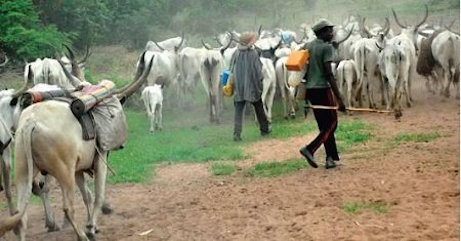
Nigerians from all works of life have continued to fault plans by the Federal Government to sponsor, fund and settle Fulani herdsmen in 36 states of the country with the takeoff of the pilot scheme already in advanced stage in12 states. While Nigerians are rejected it in their dozens including state governments such as Benue, Taraba, as well as those in the Southeast and South South and organisations and institutions such as Afenifere, Ohanaeze, Middle Belt Forum, PANDEF, the Alaafin of Oyo, the Ooni of Ife, Gani Adams and Human Rights Writers Association, HURIWA, the Federal Government has kept mute.
Then on Friday morning, the main beneficiary of the plan, Myetti Allah, opened up and disclosed that the Federal Government was indeed behind the project, with pilot schemes taking off in 12 states. The office of the Vice President, Yemi Osinbajo is said to be in charge of the project execution.
The General Secretary of the Miyetti Allah Cattle Breeders Association of Nigeria, Baba Uthman Ngelzarma, during an appearance in a Channels Television Programme, Sunrise Daily, disclosed Osinbajo office is supervising the pilot scheme of Ruga settlement in 12 states of the country.
He said, “This Ruga settlement model is a component part of the livestock development and transformation plan that is being implemented under the Office of the Vice-President. It is a component part of it.
“All must agree with me that the crisis we are facing today has become a multi-dimensional one and so the approach must also be holistic. It was the desire of the Federal Government to take a holistic approach that gave birth to the Ruga settlement model and it is not only for Fulani herders.
“In southern Kaduna, there are natives who are also herders. Even in Plateau, there are other groups that are herders. It was intended for the herders as part of efforts by the government to come up with an economic model of solving this crisis.
“This is an integrated settlement that will bring about the production of pasture grass, water, schools, markets, meat and milk processing and where it can create a sub-sector of the economy. This is something that if done properly, it will create a lot of employment.”
“It is a misunderstood concept to some people. The lands are under the control of governors. This model is a trial. It will be done in 12 states to see if it can work or not. Even we, from the side of the herders, have our reservations,” he said.
This confirmation has sparked another round of biting though informed criticism, with many digging up legal and historical information to buttress their position that the Federal Government is bent on creating chaos and sparking another round of violence if the plan is imposed on the states.
Mr Femi Falana, SAN issued this statement in a group Forum called Friends of the News: “Our attention has been drawn to the report that the Federal Government has concluded plans to build RUGA or cattle colony in each of the state of the federation. As usual, the federal government has not denied the embarrassing story.
“It is pertinent to point out that the Supreme Court has held that the entire land in each state of the federation is vested in the governor. As far as the Land Use Act is concerned, the federal government has no control over any land outside the federal capital territory.
“Therefore Nigerians should rest assured that the federal government cannot forcefully acquire any land for RUGA or ranch in any state without the consent of the governor.

He painted his story with a historical background to show that cattle ranching is not new to Nigeria. According to the fiery human rights lawyer, cattle ranching was undertaken by governments of the three regions of the North, West and East in the first republic. The Western Region under the Premiership of Obafemi Awolowo, operated a ranch in Akunnu, now in Ondo state. His Eastern Regional counterpart, Dr. Nnamdi Azikiwe opened one in Obudu in Cross River State (still very active). The Northern Region under Premier Ahmadu Bello had its own in Mokwa, Niger state. Even in the Second Republic, he continues, Governor Adekunle Ajasin built one in Ikun. All, except Obudu, were ruined by the military regimes during their 29 years cumulative regimes in the country’s 59 years since political independence.
“The meat sold by Shoprite in 25 of its mauls is prepared in an abbatoir in Ikenne, Ogun state,” he said and asked rhetorically, “What stops the Oodua group from setting up a ranch to supply meat in the Southwest?”
An retired banker, Mr Egbedion Peter, in his reaction had to fish out another historic legal judgment to fault the move by the Federal Government. This is a Judgement on Open Cattle Grazing delivered by Justice Adewale Thompson in
The General Secretary of the Miyetti Allah Cattle Breeders Association of Nigeria, Baba Uthman Ngelzarma, during an appearance in a Channels Television Programme, Sunrise Daily, disclosed Osinbajo office is supervising the pilot scheme of Ruga settlement in 12 states of the country.
He said, “This Ruga settlement model is a component part of the livestock development and transformation plan that is being implemented under the Office of the Vice-President. It is a component part of it.
“All must agree with me that the crisis we are facing today has become a multi-dimensional one and so the approach must also be holistic. It was the desire of the Federal Government to take a holistic approach that gave birth to the Ruga settlement model and it is not only for Fulani herders.
“In southern Kaduna, there are natives who are also herders. Even in Plateau, there are other groups that are herders. It was intended for the herders as part of efforts by the government to come up with an economic model of solving this crisis.
“This is an integrated settlement that will bring about the production of pasture grass, water, schools, markets, meat and milk processing and where it can create a sub-sector of the economy. This is something that if done properly, it will create a lot of employment.”
“It is a misunderstood concept to some people. The lands are under the control of governors. This model is a trial. It will be done in 12 states to see if it can work or not. Even we, from the side of the herders, have our reservations,” he said.
This confirmation has sparked another round of biting though informed criticism, with many digging up legal and historical information to buttress their position that the Federal Government is bent on creating chaos and sparking another round of violence if the plan is imposed on the states.
Mr Femi Falana, SAN issued this statement in a group Forum called Friends of the News: “Our attention has been drawn to the report that the Federal Government has concluded plans to build RUGA or cattle colony in each of the state of the federation. As usual, the federal government has not denied the embarrassing story.
“It is pertinent to point out that the Supreme Court has held that the entire land in each state of the federation is vested in the governor. As far as the Land Use Act is concerned, the federal government has no control over any land outside the federal capital territory.
“Therefore Nigerians should rest assured that the federal government cannot forcefully acquire any land for RUGA or ranch in any state without the consent of the governor.
He painted his story with a historical background to show that cattle ranching is not new to Nigeria. According to the fiery human rights lawyer, cattle ranching was undertaken by governments of the three regions of the North, West and East in the first republic. The Western Region under the Premiership of Obafemi Awolowo, operated a ranch in Akunnu, now in Ondo state. His Eastern Regional counterpart, Dr. Nnamdi Azikiwe opened one in Obudu in Cross River State (still very active). The Northern Region under Premier Ahmadu Bello had its own in Mokwa, Niger state. Even in the Second Republic, he continues, Governor Adekunle Ajasin built one in Ikun. All, except Obudu, were ruined by the military regimes during their 29 years cumulative regimes in the country’s 59 years since political independence.
“The meat sold by Shoprite in 25 of its mauls is prepared in an abbatoir in Ikenne, Ogun state,” he said and asked rhetorically, “What stops the Oodua group from setting up a ranch to supply meat in the Southwest?”
Another Nigeria, Egbedion Peter, a retired banker had to fish out another historical cum legal judgment to fault the move by the Federal Government. This is an Judgement on Open Cattle Grazing delivered by Justice Adewale Thompson in 1969.
In the suit with No AB/26/66, delivered on April 17, 1969 at the Abeokuta Division of the High Court, the honourable Justice said, among others “I do not accept that a custom exits which imposes an obligation on the owner of a farm to fence his farm whilst the owner of cattle allows his cattle to wander like pest and cause damage. Such a custom, if it exists, is unreasonable and I hold that it is repugnant to natural justice, equity and good conscience and therefore unenforceable…in that its is highly unreasonable to impose the burden of fencing a farm on the farmer without the corresponding obligation on the cattle owner to fence in his cattle.
“Sequence to that, I banned open brazing for it is inimical to peace and tranquility and the cattle owners must fence or ranch their animals for peace to reign in these communities”.
Indeed the continued silence on the controversy by the Federal Government has raised fears about the import of another law which is being sponsorship by the Presidency as an executive bill for passage by the National Assembly.
Called the Waterways and their Banks Bill, it’s passage, it is feared, would give the Federal Government the power to annex of lands adjoining the river banks. There is palpable fear that it may ultimately lead to the abrogation of the Land Use Act, which currently vests ownership and control of lands in the country on state governors.
“If it is passed by the current government friendly National Assembly, this amounts to bringing the cattle grazing colonies through the backdoor,” Mr Peter said, adding, “Former Senate President Bukola Saraki and Speaker, Yakubu Dogara saw through this bill and they rejected it.”
Senator Shehu Sani, who represented Kaduna Central Senatorial District in the 8th NASS, said the Ruga plan is a disaster in making and reception. In an earlier tweet, Thursday, he said: “Establishing a ‘Rugan Fulani’ settlement in some states where spears and swords are flying over heads and without facilitating a comprehensive inter communal peace plan and MOU, will be a recipe for disaster.The architects of the idea are viewing the problem from their tinted windows.”
The Ruga scheme intruded rudely into the public space when the permanent secretary in the Federal Ministry of Agriculture and Rural Development, Alhaji Muhammed Umar on Monday, June 24,in Abuja announced the plan.
According to Umar: “It is a concept that we developed to deal with internal security and we felt that to do away with herders and farmers’ conflict, we need to settle those that breed animals. We want to get them a place whereby we develop a settlement for them, we provide water for their animals, we provide pasture, we provide schools for their children; we provide security, agro-rangers.
“We also felt we need to develop cattle markets whereby you don’t need to be transporting animals for a very long distance. Under the new plan, cattle herders are expected to be registered and recognised with cooperatives for the purpose of the ranching scheme.”
Alhaji Umar was reportedly summoned to the Villa by the government. Details of his meeting is yet to be made public. But it may, in all likelihood, address the controversy frontally and reassure Nigerians of its sincerity about the programme.

