

By Ayo Kehinde
Following their successful interception of US unmanned submarine and their subsequent attack on ship going through Straight of Hormuz, Iran has turned the Middle East war against the US, forcing Brent crude, the international benchmark, to rise to around $105.21 per barrel, gaining more than 4 percent from $100.57 on Wednesday.
West Texas Intermediate, the US benchmark, also climbed to about $96 per barrel as markets assessed the potential impact of the conflict on global energy supplies.
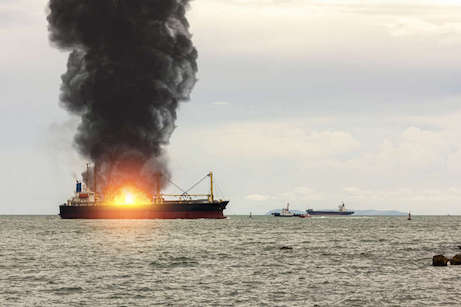
The price surge followed reports that Iran’s Islamic Revolutionary Guard Corps attacked US vessels, oil tankers and other vessels attempting to pass through the Strait of Hormuz.
The waterway normally carries about one-fifth of the world’s oil supplies, so any prolonged disruption would be a major threat to global energy markets.
The UK Maritime Trade Operations agency said several merchant vessels in the Northern Arabian Gulf and Gulf of Oman had been subjected to disabling fire amid ongoing military activity.
Iran subsequently expanded a prohibited zone to parts of the Gulf of Oman and Arabian Sea, warning vessels entering the area without coordination could face sanctions.
Tehran has also restricted traffic through the Strait of Hormuz since the conflict began, requiring vessels to obtain permission and pay transit fees before passage.
Even so, US President Donald Trump said oil prices would fall once the United States wins the war, while claiming that Washington controls the strategic waterway.
However, the conflict remains unresolved, with reports indicating that US advisers privately expect the confrontation could continue for an extended period.
For Nigeria, the oil-price rally presents a potential boost to government revenues but could also increase pressure on consumers and businesses.
Brent crude at above $100 per barrel is significantly higher than the $64.85 benchmark used in the 2026 federal budget. If sustained, the higher price could increase government earnings from crude sales, royalties, petroleum taxes and other oil-related revenues.
The gains, however, will depend on Nigeria maintaining crude production and export volumes. Lower production could limit the benefit of higher international prices.
At the consumer level, the impact is already being felt through higher petrol prices.
The average pump price has risen from about ₦830 per litre in February to ₦1,310 as of the time of this report, increasing transportation and operating costs for households and businesses.
The latest crude rally could put further pressure on petrol prices if international oil prices remain elevated.
The development highlights the mixed effect of higher crude prices on Nigeria: stronger prices can improve government revenues and foreign exchange earnings, while simultaneously increasing the cost of petroleum products and putting additional pressure on inflation.
With tensions around the Strait of Hormuz continuing to escalate, oil markets are likely to remain sensitive to any further disruption to crude production or shipments from the Middle East.
