By Obi Anyadike, Senior Editor, Africa
Malam Aliyu* lives in a neat, two-bedroom house in Nigeria’s northern city of Kaduna. Squeezed into the small living room is a large, brand-new sofa set, still in its plastic. A plasma TV is on the wall. Outside, in the yard, is an area where he plans to raise poultry.
It’s the home you might expect of a mid-level public servant, maybe a teacher – probably not that of a senior ex-jihadist commander.
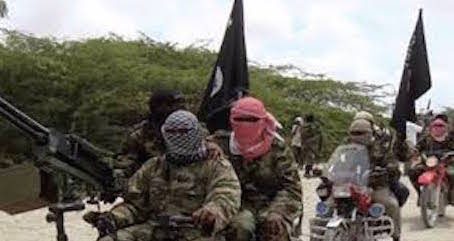
Aliyu has a new life now. The old was the decade he spent fighting with Boko Haram and then with the breakaway Islamic State of West Africa Province (ISWAP) in the scrubland of the northeast. It’s the two wives and four children he left behind when he defected, and the power he once wielded as a jihadist rijal – literally a “man” – in zones under the insurgents’ control.
In his early thirties, with a wispy goatee, Aliyu has remarried to a forthright woman from the northeastern city of Maiduguri. She is also former Boko Haram, and they have been set up with the rent-free house in Kaduna, a business license, and a small monthly stipend provided by Nigeria’s domestic spy service, better known as DSS.
The price of this largesse: to work for DSS to turn other jihadists under a clandestine project known as sulhu – Arabic for peacemaking. It’s so controversial that no government representative would go on record to discuss it, and given Abuja’s hostility to independent reporting on security matters, few Nigeria-based civil society figures wanted to be named either.
Sulhu is applauded by its supporters as smart warfare – a means to remove senior jihadists from the battlefield more effectively than the stuttering orthodox military campaign. “We have a proof of concept; it’s working,” said an Abuja-based analyst, who wouldn’t agree to be identified beyond that description. “It’s depleting the enemy’s fighting force.”
But the men on the sulhu programme are almost certain to have been involved in atrocities. They have not been granted a formal amnesty, but neither have they been held to account for any crimes committed in a brutal conflict that is now in its twelfth year. It’s a war that has killed 35,000 people – 350,000 if you include the victims of the accelerating humanitarian crisis – and upended the lives of millions more, according to the UN.
Sulhu grew out of the behind-the-scenes attempts to free the Chibok School girls seized by Boko Haram in 2014. After years of painstaking contact-making through a network of mediators, it dawned on the negotiators that not only did they have an opening to secure the release of some of the schoolgirls, but there were also mujahideen signalling they might be open to dialogue – a potential breakthrough in a deadlocked conflict.
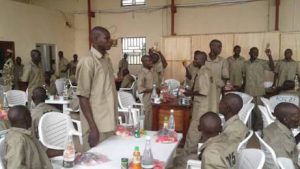
Repentant Boko Haram terrorist dining under government deradicalisation programme
A total of 150 mujahideen have surrendered their weapons and crossed over since 2019, according to people familiar with the programme. In the last few weeks, there has been a separate surge, related to fights and clashes within the jihadist movement following the death this May of Abubakar Shekau, who had led Boko Haram since 2009.
Some of those mujahideen, like Aliyu, were commanders, known as qaid – in charge of several districts. Such was the importance attached to the initial group that they were invited to Abuja, where they met representatives of President Muhammadu Buhari.
Under sulhu, defectors are enrolled in a six-month “deradicalisation” course in the military’s demobilisation and reintegration centre in Mallam Sidi, in northeastern Gombe State. After promising to renounce violence and be good citizens, they are issued with a graduation certificate, signed by a high court judge – and some have then gone on to set up businesses, from cap-making to chicken-rearing.
Sulhu is run by DSS and the military, but is separate from the army’s much larger disarmament, demobilisation, and reintegration initiative, known as Operation Safe Corridor (OSC) and also based in Mallam Sidi.
OSC is aimed at low-risk former combatants.
Those on the sulhu initiative are the turbaned rijal, exultant in victory, killing without remorse. Before joining ISWAP, prior to the split from Boko Haram, these men had been obedient to a hard way promoted by then-leader Shekau, who declared that anybody living outside their zone of control was an infidel, punishable by death or enslavement.
But allowing jihadists to return to civilian life is clearly problematic. The military’s far more limited OSC initiative, resettling low-risk Boko Haram, has run into a wall of criticism – including from some senior politicians who misrepresent Mallam Sidi as a holiday resort.
And there’s no appetite from the government to even begin to publicly discuss sulhu. “There’s a lack of buy-in and a lot of pushback from sections of the military and political office holders who don’t see the need for this process,” said an Abuja-based lawyer.
Aliyu feels relatively comfortable in big cities like Kaduna and Maiduguri. But there are places where he knows he would receive a far rougher reception. “People suffered,” he acknowledged. “They lost a lot [because of us].”
For DSS, sulhu makes strategic sense. Aliyu, for example, is a so-called “pioneer”, an early member of Boko Haram as well as a qaid – this means he has a deep and intimate knowledge of the movement and the men he fought with.
The bigger picture
Supporters of sulhu also stress it is not an amnesty programme. The slate, they say, has not been wiped clean for crimes committed. President Buhari has awarded them clemency, not forgiveness, and that can be withdrawn at any time.
Sulhu offers a way out for those looking to quit. It’s a peace deal made with the individual combatants, and protects them from either being possibly killed by the military if they are caught defecting independently, or indefinite detention in military barracks in Maiduguri “A bullet or Giwa is not much of a choice,” said the researcher. “Sulhu is a much better option.”
Neither is sulhu like the transactional “cash-for-guns” pacification schemes used in other Nigerian conflicts. It uniquely also welcomes the wives and children of the former fighters, who are given vocational training and psychological support in a Borno State-run centre in Maiduguri.
For rijal weighing whether to leave the bush, the fact that families are kept together provides a strong inducement, said Aliyu.
But civil society groups are highly critical of a process that favours perpetrators at the expense of their millions of victims. “From a human rights point of view, they should have been brought to justice,” said the Abuja-based lawyer. “This is helping impunity to grow.”
Those on the sulhu programme “melted into the crowd – there was no attempt at [implementing the] truth-telling, reparations, or accountability mechanisms that’s mentioned in the sulhu agreement,” added the lawyer.
The former government-Boko Haram intermediary, meanwhile, was also concerned that sulhu – a well-funded but opaque programme – is being promoted as a winning strategy within the security establishment, when he believes it will have little real impact on the war.
“Eight out of 10 of those who defected did so because they [had committed a crime] in the bush, not because they want to stop killing, or have changed their ideology,” the intermediary told The New Humanitarian. That limits their influence over the mujahideen that fight on.
Advocates of sulhu see it as more than just a counter-insurgency tool. According to Mustapha Zannah, a former barrister who helped broker the release of both groups of Chibok girls, the larger goal has been to find a sliver of common ground that could be built upon to reach a political settlement – a potential way out of the conflict’s cul de sac.
The New Humanitarian Editor’s note: This story was based on six months of reporting and research. Government officials, former jihadists, analysts, journalists, displaced people, and civil society workers were interviewed, but nearly all asked to have their names withheld or altered due to security concerns. The New Humanitarian is UN Publication and this report is abridged version of the full story.