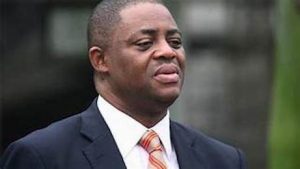
Diplomatic tensions between Nigeria and South Africa have come under fresh scrutiny following allegations by Nigeria’s High Commissioner to South Africa, Femi Fani-Kayode, that officials of the South African Presidency deliberately excluded Nigeria from the livestream of a diplomatic ceremony attended by President Cyril Ramaphosa.
Fani-Kayode alleged that the South African Presidency deliberately cut out the introduction of the Nigerian delegation and his speech during the presentation of letters of credence by 15 ambassadors at the South African Presidential Guest House in Pretoria.
The Nigerian envoy, who disclosed the incident in a statement, said all the other 14 ambassadors were formally introduced and allowed to deliver speeches, while Nigeria’s presentation was completely omitted from the broadcast.
He described the ceremony as historic, noting that it marked the first posting of a substantive ambassador of the Federal Republic of Nigeria to South Africa in four years.
According to him, the event was livestreamed by the South African Presidency, attracting viewers from Nigeria, South Africa and other parts of the international community.
Fani-Kayode said the broadcast was interrupted when it was time for the Nigerian delegation to be introduced and resumed only after his speech had ended.
“Every single one of the 15 Ambassadors that were present were introduced formally and gave a speech. Curiously, the South African Presidency refused to air the introduction of my goodself and the Nigerian delegation or to air my speech.
“They went a step further by cutting us out of the livestream completely and went back on the livestream only after my speech was concluded.
“Of all the 15 introductions and speeches that were made and delivered this morning, only Nigeria’s was cut out,” he said, adding that the omission was particularly troubling because every other ambassador at the ceremony was accorded the opportunity to have their introduction and address broadcast.
The Nigerian envoy said he immediately brought the matter to Ramaphosa’s attention during the photo session following the ceremony.
He acknowledged the South African president’s response, saying Ramaphosa personally took him to the relevant officials, questioned them and directed them to resolve the matter.
“I raised the issue with President Ramaphosa directly during the course of the photo session, and whilst we were still on the premises and, in fairness to him, he took me to the relevant officials and acted with despatch.
“Right there in my presence he questioned them and directed them to resolve the issue immediately,” he said.
Fani-Kayode, however, said the intervention came too late to reverse the omission from the livestream, leaving Nigeria as the only country whose presentation was not broadcast.
He suggested that some elements within South Africa were uncomfortable with Nigeria’s presence and voice, but maintained that his diplomatic mission would continue as long as he enjoyed the confidence of Ramaphosa.
“Clearly some elements in South Africa do not want to hear what we have to say or see our faces, but we are here to stay as long as we are welcome and have the confidence of President Ramaphosa, which I am sure we do,” he stated.
Fani-Kayode also disclosed that at least two Nigerian television stations were present at the event and recorded his speech, adding that the footage would be released to the Nigerian public.
He said recordings of his direct complaint to Ramaphosa and the South African president’s intervention would also be made available.
In a further demonstration of his displeasure, the Nigerian envoy declined an interview request from the South African Broadcasting Corporation (SABC), the country’s state-owned broadcaster.
He said he turned down the request while still at the venue because of what he described as the unacceptable treatment of the Nigerian delegation.
According to him, he asked the broadcaster’s representatives to listen to his speech instead, pointing out that officials of the South African Presidency had refused to air it.
Incident Rekindles Concerns Over Nigeria-South Africa Relations
The incident comes against the backdrop of recurring diplomatic concerns over the treatment of Nigerians and other African nationals in South Africa, particularly attacks on foreign nationals commonly associated with xenophobic tensions.
Relations between Nigeria and South Africa have periodically been strained by attacks on Nigerians, allegations of discrimination and concerns over the safety of Nigerian citizens and their businesses in the country.
The two countries, however, remain major African powers with longstanding diplomatic, economic and political relations and have continued to engage on issues affecting bilateral cooperation and the continent.
Fani-Kayode has previously been vocal in condemning xenophobic attacks and criticising South African authorities over the treatment of Nigerians.
Reaffirming his position, the envoy said his criticism of the incident should not be interpreted as hostility towards South Africa or its people, stressing that he continued to hold the country in high regard.
“One thing is clear: I have immense respect and affection for South Africa and the South African people, but I will not be anywhere or tolerate anyone who disrespects or treats our Government or our people flippantly,” he said.
He also thanked Ramaphosa for his intervention, expressing appreciation for the South African president’s response after he raised the complaint.
“My thanks go to President Ramaphosa for his concern and timely intervention,” he said.
The South African Presidency had yet to provide an explanation for the alleged exclusion of the Nigerian delegation from the livestream, according to Fani-Kayode’s account.