

By Ayo Kehinde
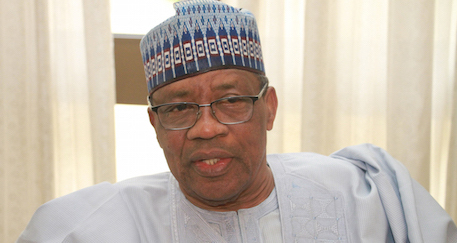
Former Military President, General Ibrahim Babangida, has revealed two intimate secrets of his 88th life span involving a close but misunderstood friendship with the late Head of State, General Sani Abacha and his late wife, Maryam.
He described Abacha as his “best friend” until his death, despite the widespread perception that the two military leaders were enemies.
Babangida disclosed this in a viral video circulating on social media, where he spoke about his relationship with Abacha and the perception of rivalry that had surrounded the two former military rulers.
According to Babangida, he and Abacha were aware that Nigerians believed they were not on good terms but deliberately allowed the perception to persist.
“We were the best of friends. But a lot of Nigerians thought otherwise. We knew Nigerians thought otherwise. We knew they would think otherwise. And we decided to capitalise on it and allow you to keep on beating in the bush,” Babangida said.
Babangida said the perception of hostility between him and Abacha became so strong that some of their mutual friends became afraid to associate openly with him. He recalled the experience of a mutual friend who wanted to visit him but became apprehensive because he believed Abacha might be angry.
According to Babangida, the man approached Abacha to seek permission before visiting him.
Babangida said Abacha was surprised by the request and reminded the man that Babangida was the person who had introduced him to Abacha in the first place.
He quoted Abacha as telling the man: “I knew you knew me. Babangida introduced you to me. Now you are asking me permission to go and see him. What sort of a human being are you?”
Babangida said Abacha further told the man that when he eventually left office, the same person could become afraid to visit him because of the perception surrounding their relationship.
“The man felt uncomfortable,” Babangida recalled.
Babangida said Abacha later called him and narrated what had happened, expressing disbelief that their mutual friend had sought his permission before visiting him.
“And the following day Abacha called me and told me, ‘Will you imagine so, so and so? This is what he told me.’ I said, ‘No, but are you surprised?’ He said, ‘No,’” Babangida recalled.
He said they subsequently agreed not to correct the man’s perception or discuss the matter with him.
“I said, ‘Okay, let’s leave it to lie down like that. Don’t talk to him about it. I’m not going to talk to him about it,’” he said.
The account provides a rare personal insight into the relationship between two of Nigeria’s most influential military figures, whose careers were closely intertwined but whose relationship was often portrayed as hostile.
Babangida ruled Nigeria as Military President from 1985 until he stepped aside in August 1993. Abacha, who held senior military positions during Babangida’s administration, later became Head of State in November 1993 after the collapse of the Interim National Government led by Chief Ernest Shonekan.
Abacha’s rise to power followed the political crisis triggered by the annulment of the June 12, 1993 presidential election and the eventual collapse of the Interim National Government.
He ruled Nigeria until his sudden death on June 8, 1998. He was succeeded by General Abdulsalami Abubakar, whose administration oversaw a transition that culminated in the return to democratic rule in May 1999.
Abacha’s years in power remain one of the most controversial periods in Nigeria’s political history, with his administration facing intense criticism over its treatment of political opposition and pro-democracy activists.
Babangida’s account, however, presents a different dimension to the relationship between the two men, suggesting that the public perception of hostility did not reflect their private dealings.
According to Babangida, both men were aware of the perception but deliberately chose not to dispel it, allowing the belief that they were enemies to continue even among people within their wider circle.
For his wife, Maryam, Babangida recalled how she once found a letter from another woman at their home.
The footage is from an episode of NTA’s Executive Discourse featuring Babangida, which originally aired in August 2022. In the interview, he reflected on his marriage to Maryam and some of the experiences they shared during their years together.
Babangida said the incident happened after his orderly brought a letter from his office and left it on the dining table. The letter was from a woman, and Maryam found and read it before he returned home.
“One day my orderly innocently brought a letter from my office. That letter came from a girl. She opened the letter and read it,” Babangida recalled.
When he returned from the office, he saw the letter and immediately realised that it should not have been brought home.
“I said, look, I am sorry, this letter should not have been here in the first place. The boy I had is a new one, the old one knew the letters to bring home. I didn’t teach him well,” he said.
Rather than turning the situation into a serious argument, Babangida said Maryam simply smiled and called him a “crook”.
“I said it wouldn’t happen again. And that I would tell the boy not to bring wrong letters home, he can bring mine and hers home,” he recalled.
Babangida said the incident reflected Maryam’s understanding of his personality and the demands of his public life. He described her as a woman who understood him and was willing to resolve disagreements without allowing them to affect their relationship.
“It took a woman who understands my way of life to even forgive me. So, when I’m wrong, I always admit it,” he said.
He also recalled that Maryam often believed her mother had spoiled him because he was used to getting his way.
“She believes that my mother-in-law spoiled me, that I’m always right,” he said.
Babangida and Maryam married on September 6, 1969, and had four children: Aisha, Muhammad, Aminu and Halima.
In his 2025 autobiography, “A Journey in Service”, Babangida described Maryam as an important part of his life and recalled promising her that he would not take multiple wives.
Maryam served as Nigeria’s First Lady from 1985 to 1993 and was known for her work through the Better Life Programme for Rural Women, which focused on improving the welfare and economic opportunities of women in rural communities.
She died on December 27, 2009, in Los Angeles at the age of 61 after battling ovarian cancer. Babangida was by her side at the time of her death.
