

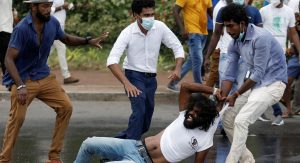
Pro and anti-government demonstrators clash in Colombo amid burnt cars and looted shops
An hour’s drive from Colombo, a luxury hotel wedding venue was utterly destroyed on the night violence swept across Sri Lanka.
It’s difficult to fathom the fury that people must have felt to not only set fire to it and smash it to pieces, but also loot everything they could get their hands on.
The unrest happened amid the country’s worst economic crisis since independence from Britain in 1948, which has been blamed on a combination of COVID, rising oil prices and populist tax cuts by the president and his brother, until recently the prime minister.
The Avenra Hotel’s manager, Yohan Perera, says a crowd of up to 2,000 people attacked the complex, believing the owner had links with the ruling Rajapaksa family. However, Mr Perera insists there was no connection.
“They have taken every single thing. The cutlery, the forks, spoons, knives, plates, even the beds,” he said. “Everything is gone.”
No part of the hotel was left untouched. A safe is upturned next to the pool, the toilets ripped out from the floor and every tile in the bathroom smashed.
The hotel rooms and reception halls are blackened shells covered in glass and debris.
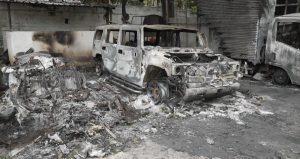
Then there’s the luxury car collection. The attackers set fire to more than a dozen cars, including a Lamborghini, Hummer and a Cadillac. All that’s left is burned out shells, a few tyre rims and mounds of ashes where a stray cat has made a home.
Police have now arrested more than 800 people nationwide who are accused of ransacking property, looting and setting fire to MPs’ houses on 9 May.
But human rights lawyers say in some cases police are jailing people who were out on the streets watching what was happening, rather than actively taking part in violence.
The COVID-19 pandemic then torpedoed its pivotal tourism industry, which makes up its fifth-largest source of foreign revenue.
Protests have been taking place on the island nation of 22 million people since the end of March between pro-government supporters and those calling for an immediate change in authority.
This economic downturn meant Sri Lanka was already in a precarious state when the most recent unrest erupted.
The country also has significant debt and was due to pay £5.7bn this year, with its total foreign debt standing at £41.5bn.
Rising oil prices and tax cuts have meant Sri Lanka now has as little as $50m (£40m) of useable foreign reserves.
Sri Lanka needs at least 40,000 tonnes of gas each month, and the monthly import bill would be $40m (£32m) at current prices. Sky News Report
