

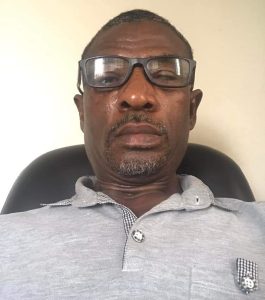
Comrade March Oyinki
Since 1999 the Federal Government have continually imposed on the Nigerian people a biased and non-Independent National Electoral Commission as its rigging machinery and an extension of its cacophony of unwieldy instruments of oppression, self-perpetration and imposition. Nigerians are not so naive as to be unfamiliar with the shambolic electoral processes and conduct of a partiality ridden elections by INEC that have produced, without exception, all previous administrations and including the current Muhammadu Buhari led Federal Government.
Characteristically, and quite expectedly, all the electoral bodies that were setup by the Federal Government and saddled with the responsible of conducting elections since the first republic general election that produced General Olusegun Obasanjo as the president in 1999, were highly flawed and marred by massive mal-practices such as rigging, violence, vote buying and disenfranchisement. It is sad and quite painful that for over two decades, successive administrations have continually deceived the citizens of this country by making false promises of electoral reforms that have kept the people in perpetual denial of a free and fare election.
After the 1999 elections, Mr. Femi Okurounmu, who was a member of the National Conference Committee on Political Restructuring and Form of Government, told members of the Committee that former President Olusegun Obasanjo did not win the 1999 presidential election, alleging that Obasanjo was merely “anointed” to become president by some power brokers in the country. He made this statement when the committee was debating modalities for rotating electoral positions.
Similarly, President Jonathan while receiving the report of the National Stakeholders Forum on Electoral Reform presented by former Senate President, Ken Nnamani, in Abuja, said notwithstanding the Supreme Court judgment that upheld the results of the 2007 elections that produced the late Umaru Yar’Adua as President and himself as Vice President has caused him a lot of embarrassment as he was confronted with “embarrassing questions” over the elections whenever he travelled abroad.
In 2011, INEC conducted one of the most violent elections in the country inwhich 11 NYSC members were killed, those who volunteered to serve the nation as INEC Returning Officers in the North. The PDP alleged widespread irregularities at the polls, including the use of underage voters by the APC and threatened to petition the results at the tribunal. But President Jonathan was not going to be a party to litigation as he called Mohammadu Buhari on the phone the morning after the election to congratulate him.
This singular action of Jonathan to concede electoral victory to APC, has become a record as the first Nigerian president to be unseated, as reflected in hid words; “I promised the country free and fair elections. I have kept my word. Nobody’s ambition is worth the blood of any Nigerian. The unity, stability and progress of our dear country is more important than anything else.” It was in that same morning President Jonathan made this heroic statement that resonated across the globe.
The February 2023 Presidential Election results as declared by INEC is currently been contested by the Labour Party (LP) and the People’s Democratic Party (PDP) among others in the Election Tribunal. Despite President Buhari’s promises to ensure INEC conducts a free and fair elections, he failed because the presidential elections in which former governor of Lagos State, Bola Tinubu emerged as the president elect is flawed. Even Olusegun Obasanjo, reacted while speaking to the media, 27 February, 2023 said, the results that was declared by INEC does not correspond with the wish of the Nigerian people.
All successive government in the last 24 years have clearly demonstrated beyond any reasonable doubt that the failure of INEC is a deliberate ploy, which is indicative of the unwillingness of government to sanitize the electoral process, because, it directly benefits from it. The 2022 electoral act as amended and the introduction of the electronic verification and transmission systems have proven to be the best we have ever had. Nonetheless, the deliberate intervention by government by influencing of the election processes remains the greatest impediment and hindrance of our electoral process.
For the electoral process in Nigeria to work, the federal government must stop wielding its over-bearing influence on INEC and must be seen to be committed and taking the right steps in its attempt to sanitize the electoral process. As part of efforts to improve the electoral act, Femi Falana (SAN), suggests that a further review of the electoral act is required to reduce the tenure of election petitions in the Election Tribunal from 90 days to 14 days, citing the introduction of the electronic verification and transmission system, which was not there before the enactment of the Electoral Act, as a reason, since it has made the entire process seamless.
This position by Falana is one that we at Movement For Change Worldwide (MFCW) also agree with, but additionally, we would like to suggest that the government should endeavour to reduce the manual interface as provided for in the Electoral Act, to make it more effective and more difficult for either the government and INEC itself to manipulate or take advantage of such loopholes in the act.
