

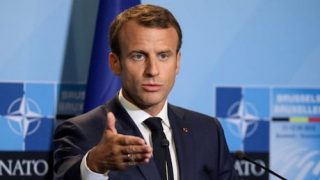
A year ago, he was a member of the government of one the most unpopular French presidents in history.
Now, at 39, he has won France’s presidential election, defeating first the mainstream center left and center right and now the far right as well.
He got lucky
No doubt about it, Mr Macron was carried to victory in part by the winds of fortune.
A public scandal knocked out the initial frontrunner, center-right candidate François Fillon; and Socialist candidate Benoît Hamon, already on the left fringe of the party, suffered a very public drubbing as traditional voters looked elsewhere.
He was canny
In April 2016, he established his “people-powered” En Marche! (On the move) movement and four months later he stood down from President François Hollande’s government.
Having established En Marche, he took his cue from Barack Obama’s grassroots 2008 US election campaign, says Paris-based freelance journalist Emily Schultheis.
His first major undertaking was the Grande Marche (Big March), when he mobilized his growing ranks of energized but inexperienced En Marche activists.
“The campaign used algorithms from a political firm they worked with – who by the way had volunteered for the Obama campaign in 2008 – to identify districts and neighborhoods that were most representative of France as a whole,” Ms Schultheis says.
“They sent out people to knock on 300,000 doors.”
The volunteers didn’t just hand out flyers – they carried out 25,000 in-depth interviews of about 15 minutes with voters across the country.
That information was entered into a large database, which helped inform campaign priorities and policies.
“It was a massive focus group for Macron in gauging the temperature of the country but also made sure that people had contact with his movement early on, making sure that volunteers knew how to go door to door. It was a training exercise that really laid the groundwork for what he did this year,” Ms Schultheis explains.
And he capitalised on it. And won. BBC
