

From Victor Osula, Abuja
Presidential candidate of the African Democratic Congress (ADC) presidential candidate, Atiku Abubakar, has proposed a targeted production subsidy for petroleum products refined in Nigeria, saying the measure would reduce pump prices while encouraging domestic refining, job creation and economic activity.
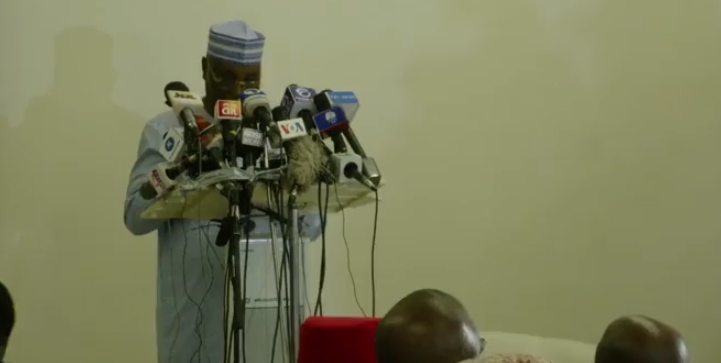
Atiku unveiled the proposal on Friday in Abuja while addressing a news conference on fuel prices, the cost of living and the economic hardship facing Nigerians.
He said that under the proposal, government support would apply exclusively to petroleum products refined locally and sold to Nigerians, with imported petroleum products expressly excluded from the scheme.
According to him, the intervention would also be subject to a fixed spending limit, approval by the National Assembly and independent audits to ensure transparency and prevent abuse.
“If elected, from May 29, 2027, I will introduce a transparent production subsidy for petroleum products refined in Nigeria and sold to Nigerians”, Atiku said.
He said the proposal is designed to reduce the cost of domestic production rather than return Nigeria to the former system of subsidising imported petrol.
He likened the proposed arrangement to government support for a Nigerian rice miller, explaining that reducing the cost of local processing could make the finished product cheaper, stimulate demand and create opportunities for farmers, processors, transporters and other businesses.
“Government support must bring prices down. Only products confirmed to be refined in Nigeria will qualify. Imported products will not”, he said.
Atiku said the ultimate objective was to ensure that government intervention translated directly into lower prices for consumers, increased domestic production and more employment opportunities.
He argued that such a policy would also strengthen the domestic petroleum value chain by giving local refiners an incentive to increase production while ensuring that Nigerian consumers benefit from the resulting lower production costs.
The proposal comes against the backdrop of the Federal Government’s removal of petrol subsidy shortly after President Bola Tinubu assumed office in May 2023.
The policy ended the long-standing system under which the government absorbed part of the cost of petrol, resulting in a sharp increase in pump prices and triggering higher transportation and logistics costs.
The Tinubu administration has consistently defended the reform, arguing that subsidy removal strengthened government finances, reduced pressure on foreign exchange and helped create conditions for investment in domestic refining.
In August, the Federal Government said the removal of the subsidy was necessary to create a viable market for private refining investments, including the Dangote Petroleum Refinery.
The administration has also highlighted the growth of domestic refining as one of the outcomes of its petroleum-sector reforms. The Dangote refinery, which has a reported capacity of about 700,000 barrels per day, has significantly increased Nigeria’s domestic refining capacity and reduced reliance on imported refined products.
Atiku, however, argued that the economic gains being cited by government had not sufficiently translated into improved purchasing power for ordinary Nigerians. He said the removal of petrol subsidy had pushed up the cost of transportation, food, production and logistics, with the burden ultimately transferred to households and businesses.
“When government makes energy expensive, it makes life expensive”, he said.
The ADC candidate maintained that government intervention should address the underlying cost of energy instead of depending primarily on palliatives to cushion the impact of higher prices.
He said emergency assistance had its place, but argued that temporary relief could not substitute for policies capable of permanently reducing the cost of production and improving household incomes.
“Palliatives manage pain. Good policy addresses the source of the pain”, Atiku said.
He, therefore, challenged Tinubu to reconsider his administration’s approach to fuel pricing and adopt measures capable of providing immediate relief to Nigerians.
Atiku said the President should be willing to implement a policy capable of reducing petrol prices regardless of who proposed it.
“If responsible intervention can lower prices, intervene. If changing course can help Nigerian families, change course”, he said.
The former Vice-President also offered to make his policy framework available to the Tinubu administration if it would help reduce the economic pressure on Nigerians. He said the President could implement the proposal and even take credit for it, stressing that his immediate concern was the welfare of Nigerians rather than political ownership of the policy.
“Take the credit,” Atiku said. “I ask for only one thing: Let Nigerians breathe.”
Atiku’s proposal seeks to draw a distinction between the former subsidy model and his proposed intervention, insisting that government assistance should follow locally refined products rather than imported petroleum.
He said the scheme would be tied to verifiable domestic production, with spending capped and subjected to legislative oversight and independent auditing.
Beyond petrol prices, Atiku also warned against imposing additional energy costs on Nigerians without adequate protection, particularly in relation to electricity. He said rising energy costs were affecting small businesses, manufacturers, farmers, transport operators and households, warning that further increases could compound the pressure created by higher petrol prices.
The former Vice President urged Tinubu to use the remaining period of his administration to reduce the cost burden on Nigerians rather than wait for another government to address the problems.
He said the test of economic policy should ultimately be whether Nigerians could afford basic necessities and whether increased production translated into jobs and improved purchasing power.
“Economic growth must enter the home. It must enter the market basket. It must show up in the purchasing power of the worker,” Atiku said, adding that government should not be more concerned with increased revenue and economic statistics than with the ability of ordinary Nigerians to meet their daily needs.
