By Ayo Kehinde

A former Vice President Atiku Abubakar on Wednesday appeared before the Presidential Screening Panel of the African Democratic Congress (ADC), where he unveiled what he described as a comprehensive economic rescue blueprint and a bold security agenda ahead of the party’s presidential nomination process for the 2027 elections.
Atiku, in a document submitted to the panel, said the screening exercise provided him with an opportunity to present practical solutions to Nigeria’s worsening economic and security crises.
The former vice president said the country was battling economic stagnation, rising unemployment, institutional decline, and growing insecurity, stressing that urgent and decisive leadership was needed to reverse the trend.
He lamented the hardship confronting many Nigerians, noting that families and businesses were struggling under policy uncertainty and declining investor confidence.
“Nigeria cannot continue on the current trajectory where families struggle daily under crushing hardship, businesses collapse under policy uncertainty, and investor confidence continues to erode in the absence of coherent economic leadership,” Atiku stated.
According to him, his proposed economic recovery plan would focus on large-scale job creation, expansion of the private sector, fiscal discipline, stable macroeconomic management, and policies designed to restore investor confidence in the Nigerian economy.
Atiku also expressed concern over the country’s worsening insecurity, including persistent killings, kidnappings, and violent attacks across several parts of the nation.
He said no responsible government should allow citizens to remain vulnerable to criminal violence, adding that his proposed security framework would prioritise intelligence-driven operations, stronger collaboration among security agencies, decentralised policing structures, and firm political resolve to combat criminality.
“At this defining moment in our national life, Nigeria does not need experiments. It needs tested leadership, clarity of vision, and the courage to make difficult but necessary decisions in the national interest,” he added.
The former vice president further reaffirmed his commitment to building what he described as a secure, united, and prosperous Nigeria where citizens could pursue opportunities in peace and dignity.
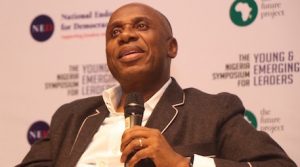
Meanwhile, former Minister of Transportation and ex-Rivers State Governor, Rotimi Amaechi, used his appearance before the panel to criticise the existing federal character principle, declaring that the policy had outlived its usefulness.
Amaechi vowed that if elected president in 2027, he would replace the federal character system with competency and meritocracy in governance and public appointments.
The former governor, who was the third and final aspirant screened by the panel, also dismissed calls for him to step down for any other aspirant seeking the ADC presidential ticket.
“We are going for primaries,” Amaechi told journalists shortly after concluding his session with the panel before leaving the venue without further comments.
Another presidential aspirant, Mohammed Hayatu-Deen, also reaffirmed his ambition after appearing before the ADC screening committee.
In a statement issued on Wednesday, Hayatu-Deen expressed appreciation to members of the committee, commending what he described as the seriousness and rigour of the screening exercise.
He said Nigerians were yearning for a calm, experienced, and credible leader capable of steering the country through its current challenges, stressing that only a transparent and thorough selection process could position the ADC for victory in the 2027 general elections.
According to him, the ADC represents a clear departure from what he described as the cycle of traditional politics, adding that his candidacy symbolises a new direction for the country.
Hayatu-Deen also appealed to Nigerians to support his presidential aspiration, presenting himself as a viable alternative ahead of the next general election.
The ADC screening exercise forms part of preparations by the opposition party ahead of the 2027 presidential election, as aspirants continue consultations and policy engagements in pursuit of the party’s presidential ticket.