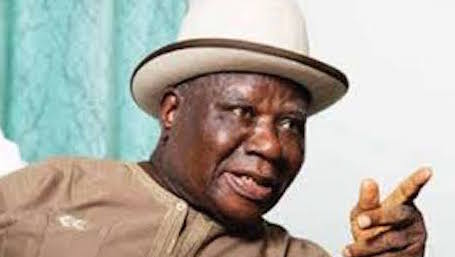
By Dr. Michael Kabi, PhD.
Today, as we reflect on the extraordinary life of Chief Edwin Kiagbodo Clark, it becomes clear that we are not merely remembering the passing of an individual.
Instead, we are celebrating a phenomenon, a titan whose impact transcended the realms of his immediate environment and resonated far beyond. Chief Clark was not just a man; he was a beacon of hope, a tireless advocate for justice, an embodiment of wisdom, and a guardian of people’s rights and heritage.
His journey through life serves as a profound testament to the power of resilience, the pursuit of justice, and the unyielding commitment to the development and betterment of humanity. His name will forever remain synonymous with service to the people and the enduring ideals of democracy, equity, and social justice.
Chief Edwin Kiagbodo Clark’s life story is one of persistence, fortitude, and a deep commitment to the betterment of his people. He spent his early years in the rural landscapes of the Niger Delta, a region rich in natural resources but severely neglected by successive Nigerian governments.
Despite his humble beginnings, Chief Clark’s story is one of remarkable rise—an ascent defined by his intellectual curiosity, his dedication to the cause of education, his political activism, and his lifelong advocacy for the rights of the Niger Delta people.
Chief Clark’s life is not just a story of political achievements or academic excellence but a testament to the power of vision, resilience, and sacrifice in pursuing a better world for all.
Early Life: Humble Beginnings and the Rise of a Voice:
Born on May 25, 1929, in Kiagbodo, a rural town in the heart of the Niger Delta, in a family with a deep understanding of the significance of education, Clark’s early years were shaped by the values of integrity, hard work, and the belief that knowledge was the key to overcoming the many challenges faced by his people.
From a young age, he experienced firsthand the difficulties of growing up in a region rich in natural resources yet plagued by underdevelopment, governmental neglect, and environmental degradation due to unchecked exploration and exploitation by transnational oil companies. This early exposure to the inequities of the system would shape Clark’s worldview and ignite his lifelong passion for justice, accountability, and the upliftment of the Niger Delta region.
A Voice for the Niger Delta: The Struggle for Justice and Equity:
Chief Clark’s life work was defined mainly by his unwavering advocacy for the rights and development of the Niger Delta.
As a true champion of the oppressed, Chief Clark took it upon himself to give a voice to the voiceless. He became a fierce advocate for the Niger Delta people, demanding that they receive their fair share of the nation’s resources. His fight was about protesting the exploitation of the region’s resources and addressing the systemic neglect of the people who lived there.
He was not merely a critic of the system; he was a reformer, a builder who sought solutions to the problems that had plagued the region for decades.
One of his most notable contributions to the Niger Delta’s struggle was his role in the formation of the Delta State Oil Producing Areas Development Commission (DESOPADEC), created in 2007 by the state government to address the developmental needs of oil-producing communities in the state.
A Pioneer in Education: A Visionary Leader for the Future:
While Chief Clark’s contributions to political advocacy were widely recognized, his impact on the education sector cannot be overstated. He understood that true empowerment could not come from oil wealth alone; it had to be rooted in knowledge, skill, and education
Chief Clark began his career as an educator, a profession he held in high regard for its potential to shape the lives of the youth. He started at the Warri Provincial College, where his innovative teaching methods and dedication to his students quickly gained him recognition. Soon after, he rose to become the principal of Bomadi Grammar School, a prestigious institution in the Niger Delta, where he inspired a generation of young minds to strive for greatness.
His passion for education was not confined to the walls of the classroom. Clark was instrumental in establishing the University of Benin in 1970, during his tenure as the federal commissioner for education. Also, he implemented the Universal Primary Education (UPE) program, which aimed to provide free primary education to every Nigerian child. This bold and visionary policy laid the foundation for the educational advancements that followed in Nigeria, ensuring that future generations had access to quality education regardless of their social standing.
His vision for higher education in Nigeria was grounded in the belief that universities should be more than just academic institutions; they should serve as engines of social change and development. The University of Benin, today a beacon of educational excellence, owes much of its existence to Chief Clark’s tireless advocacy for education and his determination to make higher learning more accessible to Nigerians, especially in the under-resourced region of the South-South of Nigeria.
Little known is his influence in the establishment of the Government Secondary School, Trou-Ebeni, the first secondary school in the whole of Bayelsa West Senatorial district, that has produced many great people from that area, including the past Governor of the State, Senator Seriake Dickson.
A Stalwart in Politics: A Tireless Advocate for the Niger Delta:
Chief Clark’s political career was just as monumental as his educational contributions.
As a statesman, Clark played a pivotal role in shaping Nigerian politics during the 1970s and beyond, championing the cause of equitable resource distribution, federalism, and social justice.
However, it was in his advocacy for the Niger Delta that Chief Clark truly made his mark in Nigerian politics. The federal government had long neglected the Niger Delta. Oil exploration had ravaged the environment, and the people of the region continued to live in abject poverty. As a leader of the South-South People’s Assembly (SSPA), Chief Clark became a fierce advocate for the equitable distribution of Nigeria’s oil revenues and a vocal critic of the environmental degradation caused by the oil industry.
His leadership in the 2005 National Political Reform Conference was instrumental in pushing the interests of the Niger Delta to the forefront of the national agenda. Clark fought vigorously for the region’s autonomy and a system of governance reflecting the true diversity of Nigeria’s ethnic and regional groups.
Clark’s influence extended beyond political leadership; he was also a key player in the fight to restore democracy in Nigeria. As a prominent member of the National Democratic Coalition (NADECO), a pro-democracy movement, Clark played a significant role in the campaign to end military rule and restore democratic governance. His courage and determination during this tumultuous period earned him the admiration of many, and his advocacy for democratic principles contributed to Nigeria’s peaceful transition to civilian rule in 1999.
A Living Archive of History: Witness to a Nation’s Struggle:
As a young politician, Clark witnessed firsthand the country’s struggle for freedom and the following turmoil.
One of the most poignant periods in Clark’s life was his experience during the Nigerian Civil War (1967–1970). As a young leader, Clark was deeply involved in promoting peace and unity during the war, working behind the scenes to facilitate dialogue and understanding between the warring factions. His efforts to encourage reconciliation and healing in the aftermath of the war shaped his worldview, reinforcing his commitment to justice, equity, and national unity.
In later years, Clark became one of the foremost advocates for preserving Nigeria’s historical memory. His recollections of the civil war and Nigeria’s transition from military to civilian rule were invaluable, offering future generations a roadmap for navigating the country’s complex political landscape. Clark’s wisdom and understanding of Nigeria’s history were instrumental in his role as a statesman and mentor to younger leaders.
A Mythical Figure in Human Form: A Man of Humility and Wisdom:
Despite his towering accomplishments, Chief Clark never allowed his successes to overshadow his humility. At his core, he remained a man deeply grounded in the values of service, integrity, and compassion. Yet, his impact was so profound that he became more than just a man; he became a symbol—a mythical figure whose legacy transcended the sum of his accomplishments.
His leadership in the Pan-Niger Delta Forum (PANDEF), an organization formed to advocate for the rights and development of the Niger Delta, further solidified his status as a mythical figure. Under his stewardship, PANDEF became a powerful force in Nigerian politics, engaging with the federal government and international organizations to address the region’s most pressing issues, including environmental degradation, poverty, and social exclusion. His ability to unite diverse groups, including ethnic and political factions, under a common cause was a testament to his extraordinary leadership skills.
Political Accountability in Delta State: A Voice for the People:
Chief Clark’s influence was not confined to education and national politics. He used his voice to demand accountability, transparency, and good governance. As a vocal critic of corruption and mismanagement, Clark did not shy away from challenging politicians, both locally and nationally, when they failed to meet the needs of the people.
During the administration of Governor James Ibori (1999–2007), Chief Clark raised concerns about the lack of transparency in managing state resources. Despite the billions generated from oil revenues, he questioned why infrastructure, healthcare, and education were so underfunded in Delta State. His advocacy for fiscal responsibility and transparency eventually led to the creation of DESOPADEC, a body designed to address the needs of oil-producing communities.
Similarly, during Governor Emmanuel Uduaghan’s tenure (2007–2015), Clark was outspoken in his criticism of the state government’s handling of public funds. He called for a thorough audit of state finances and demanded that the government focus on delivering tangible benefits to the people rather than engaging in political patronage. Even under Governor Ifeanyi Okowa (2015–2023), Chief Clark continued to demand greater attention to the environmental and social challenges faced by oil-producing communities in Delta State. His calls for action on environmental remediation and sustainable development helped raise awareness and pressure the government to take meaningful steps toward improving the lives of those most affected by oil exploration.
A Legacy That Endures: Honoring a Giant:
As we honour the life of Chief Edwin Kiagbodo Clark, we recognize that his legacy is not limited to the past; it lives in the hearts and minds of those he inspired.
His contributions to education, politics, and social justice have laid the foundation for a more equitable, inclusive, and prosperous Nigeria. His passion for the Niger Delta, his advocacy for democratic principles, and his commitment to the people’s welfare remain as guiding lights for future generations.
.