
By Ayo Kehinde
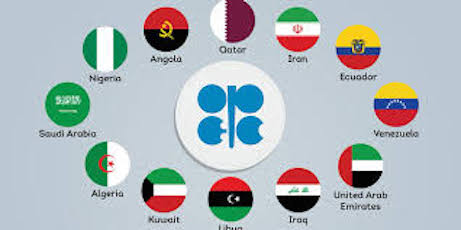
Nigeria’s crude oil and condensate production rose by 5.7 percent year-on-year to an average of 1.69 million barrels per day in October 2026, extending the country’s run of meeting its Organisation of Petroleum Exporting Countries production quota to six consecutive months.
Figures released by the Nigerian Upstream Petroleum Regulatory Commission on Wednesday showed that the country produced an average of 1,687,710 barrels per day in October, compared with 1,597,199 barrels per day recorded in the corresponding period of 2025.
The increase represents an additional 90,511 barrels per day, indicating an improvement in production compared with the previous year.
However, output declined by about 29,000 barrels per day from the 1.72 million barrels per day recorded in September, representing a month-on-month decrease of approximately 1.7 percent.
The regulator’s report stated, “Nigeria produced a daily average of 1,687,710 barrels of crude oil and condensate in October 2026.”
It added that daily production reached a peak of 1.79 million barrels per day during the month, while the lowest recorded output was 1.60 million barrels per day.
In terms of crude oil alone, excluding condensates, Nigeria produced an average of 1.51 million barrels per day in October.
This represented about 101 percent of the 1.5 million barrels per day production quota assigned to the country by OPEC, meaning Nigeria exceeded its allocation by approximately 10,000 barrels per day.
The October performance extended the country’s run of meeting its OPEC quota to six consecutive months.
Crude production stood at 1.53 million barrels per day in May, rose to 1.55 million in June and moderated to 1.51 million in July.
It declined slightly to 1.50 million barrels per day in August before recovering to 1.53 million in September and settling at 1.51 million in October.
Although October’s crude output was slightly lower than September’s, it remained above the OPEC benchmark.
The sustained performance follows an uneven production trend in the first 10 months of the year, with combined crude oil and condensate output recovering from a February low of 1.48 million barrels per day.
Production averaged about 1.63 million barrels per day in January before falling to 1.48 million in February. It subsequently recovered to 1.55 million in March and 1.66 million in April.
Output improved further to 1.70 million barrels per day in May and peaked at about 1.74 million in June. It then declined to 1.67 million in July before rising to 1.68 million in August and 1.72 million in September.
The October figure indicates that production has remained relatively close to the 1.7 million barrels per day level in recent months, although it has eased from the June peak.
In a statement issued by its Head of Media and Corporate Communications, Eniola Akinkuotu, the NUPRC attributed the relatively stable production performance to improved operational conditions in the upstream sector.
The commission said enhanced operational stability had supported production uptime and improved crude evacuation efficiency in recent months.
It added that the October performance reflected efforts by operators and other industry stakeholders to improve operational efficiency, maintain asset integrity, and strengthen production reliability across the upstream petroleum sector.
Nigeria’s ability to sustain production above its OPEC quota remains important to government revenue and foreign exchange earnings, particularly as crude oil exports remain a major source of the country’s external receipts.
However, the slight monthly decline in October highlights the need to sustain operational improvements and address disruptions that could affect production and crude evacuation.