US-Iran War: Iranian President Says No peace Talk Under Pressure, Threat
Iran’s President, Masoud Pezeshkian, has warned US President Donald Trump that there can be no successful peace negotiations under threats and pressure, insisting that dialogue must be based on mutual respect and commitments as the Middle East war remains deadlocked.
Pezeshkian gave the message on Friday while addressing a summit of the Commonwealth of Independent States (CIS) in Turkmenistan, where he condemned negotiations conducted under military pressure as coercion rather than genuine diplomacy.
“Dialogue holds meaning and a chance of success only when based on mutual respect and mutual commitments, and when devoid of pressure and threat. Negotiation conducted in the shadow of force is not negotiation; it is imposition and coercion”, he said.
Pezeshkian warned that sanctions against Iran could have far-reaching consequences for regional trade, connectivity, energy supplies and stability.
Although Pezeshkian did not mention Trump by name in his address, his remarks came amid the prolonged confrontation between Washington and Tehran and continuing efforts to negotiate an end to the conflict.
On Monday, the Iranian leader had also dismissed negotiations with the United States as meaningless, accusing Washington of resorting to assassinations, sanctions, pressure and threats while failing to honour its commitments.
His latest comments reinforce Tehran’s position that any agreement to end the war must not be imposed through military or economic coercion.
The war began in late February with US and Israeli attacks on Iran, at a time when Washington and Tehran were engaged in negotiations over Iran’s nuclear programme.
The warring parties subsequently agreed to a memorandum of understanding in June, outlining a framework for a permanent resolution to the conflict.
However, the arrangement failed to secure a lasting end to hostilities. Iranian attacks on vessels attempting to navigate the Strait of Hormuz without Tehran’s authorisation prompted the resumption of US military operations.
Negotiations have effectively remained at an impasse since then, with recent indirect talks between American and Iranian representatives on the sidelines of the United Nations General Assembly failing to produce a breakthrough.
Washington has in recent weeks scaled back military operations in favour of economic pressure and has not struck Iran since September 1, according to the account provided.
The United States and Israel have maintained that their military campaign is necessary to prevent Iran from acquiring nuclear weapons, an ambition Tehran has consistently denied pursuing.
The disagreement over Iran’s nuclear programme, alongside mutual accusations and the dispute over maritime access, has complicated efforts to secure a lasting settlement.
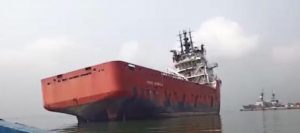
The Strait of Hormuz has become a major flashpoint in the conflict after its closure sent shockwaves through global energy markets.
The strategic waterway is a critical route for international oil and gas shipments, making disruptions to maritime traffic a concern for energy-importing countries and the wider global economy.
Iran has sought to impose its control over the shipping lane since the beginning of the war, striking vessels attempting to transit without its authorisation.
The United States has responded by imposing a counter blockade on Iranian ports and striking vessels it accuses of violating the restrictions.
The competing measures have heightened tensions around the vital shipping corridor, adding to the difficulties facing diplomatic efforts to end the war.
Pezeshkian’s warning that sanctions could disrupt regional trade, energy supplies and connectivity underscores Tehran’s concerns about the wider consequences of continued military and economic confrontation.
Post Views:
148


