

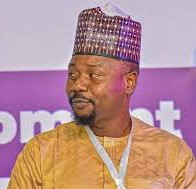
History has always reserved an intriguingly fascinating place for artists. Some become entertainers, others become chroniclers of their societies, while a rare few evolve into institutions whose influence transcends the stage. Across Northern Nigeria, a certain Dauda Kahutu Rarara belongs undoubtedly to that latter category.
A polarising figure he is; to some, he is merely a singer of politics. To many others, he is a cultural custodian, a benefactor and a voice whose melodies have become inseparable from defining political epochs. As with every figure who stands prominently upon the public square, admiration and criticism have followed him in almost equal measure. Yet objectivity demands that beneath the clamour lies a man whose contributions deserve to be examined with discernment rather than prejudice.
The greatest misconception probably surrounding Rarara is the assumption that his music exists solely to glorify politicians. Such a conclusion is both convenient and incomplete. Music has, throughout human civilisation, served as an archive of triumphs, disappointments and aspirations. From royal courts to republican democracies, musicians have celebrated kings, criticised governments and mobilised societies. Rarara simply operates within that venerable tradition. His songs have become cultural manuscripts, hewn not upon granite obelisks but upon the collective memory of millions who understand the language, rhythm and symbolism they embody.
Beyond his music lies a quieter narrative, one seldom amplified with equal enthusiasm. Rarara’s philanthropy has touched countless individuals across Northern Nigeria. Reports over the years have consistently associated him with financial assistance to widows, students, religious institutions, hospitals, orphanages and vulnerable families. During periods of economic hardship, medical emergencies and communal distress, stories have repeatedly emerged of interventions carried out without elaborate publicity. Such benevolence rarely trends for long because compassion seldom competes successfully with controversy. Yet to the beneficiaries, these acts are neither symbolic nor theatrical; they are lifelines.
His influence equally extends into youth development. In an era where unemployment continues to burden many young Nigerians, Rarara has provided opportunities for numerous musicians, instrumentalists, producers, videographers, event organisers and media professionals. Behind every successful performance stands an intricate constellation of livelihoods sustained by the creative industry he has helped cultivate. The prosperity generated through such patronage is often invisible to those who measure influence solely by political affiliations.
It is therefore unsurprising that his endorsement of President Bola Ahmed Tinubu’s re-election has generated a potpourri of opinions with an olla podrida of tongues debating it. Democracy, however, is neither diminished nor endangered because an artist chooses a political preference. Every citizen reserve both the constitutional liberty and civic responsibility to support whichever candidate he believes best represents the nation’s aspirations. Rarara has exercises that liberty openly, just as others exercise theirs in opposition. To reduce his entire identity to a political endorsement is to ignore the broader mosaic of his life’s work.
Those familiar with Nigerian political history understand that musicians have long occupied this intersection between culture and governance. Their songs inspire campaigns, immortalise administrations and occasionally become anthems of national consciousness. Rarara’s support for President Tinubu appears rooted in his conviction regarding continuity of policies, infrastructural expansion, economic reforms and national integration. Whether one agrees with that assessment remains entirely a matter of democratic choice. What ought not to be disputed is his legitimate right to advocate for those convictions without becoming the object of perpetual vilification.
Indeed, influence rarely wears an accidental face. It is painstakingly sculpted through years of consistency, resilience and public trust. Rarara commands audiences not because influence can be manufactured, but because authenticity, however contested, resonates with people. His songs permeate markets, ceremonies, campaign grounds and ordinary homes across the North. That enduring relevance cannot be dismissed as coincidence. It reflects cultural capital accumulated through decades of artistic diligence.
Critics often mistake visibility for opportunism. Yet history repeatedly reminds us that individuals occupying conspicuous positions inevitably become lightning rods for public sentiment. Every towering cedar attracts stronger winds than the surrounding shrubs. The more luminous the lantern, the longer the shadow it casts. Rarara has become one such paradox: celebrated by multitudes, misunderstood by others, yet persistently relevant despite shifting political seasons.
The more profound question is not whether Rarara supports President Tinubu’s re-election, but why his support commands such attention in the first place. The answer lies in the remarkable influence he has painstakingly amassed. Few entertainers possess the cultural gravitas to shape conversations across an entire region. Fewer still combine artistic prominence with sustained philanthropy and grassroots appeal. Such influence, like every formidable force, invites admiration, scepticism and scrutiny in equal measure.
There is an African saying that the drum does not choose who dances; it only provides the rhythm. Society, likewise, often hears only the loudest beat while overlooking the hands that carved the instrument. Rarara may forever remain a polarising figure, but history is written neither by ovation alone, nor by criticism in isolation. It is written by the totality of one’s contributions. His philanthropy, cultural stewardship, steadfast convictions and consistent influence have together erected an obelisk not chiselled from marble but etched upon the consciousness of millions. Time, that most impartial adjudicator, will ultimately determine how future generations remember him. Until then, fairness demands that he be assessed not merely through the prism of politics, but through the fuller panorama of a life that has sought, in song and in service, to leave an indelible imprint upon his people.
Sani Abdulrazak, PhD, is a writer, researcher and public affairs analyst based in Zaria, Kaduna State.
