

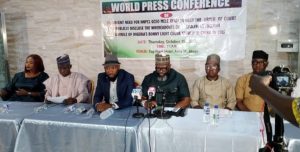
The Conference of Nigeria Political Parties (CNPP), in collaboration with more than 75 civil society organisations operating under the umbrella of the Coalition of National Civil Society Organisations (CNCSOs), has expressed profound concern over recent reports and trade data suggesting that petroleum products refined in Nigeria may be exported to Lomé, Togo, before finding their way back into the Nigerian market as imported products.
The coalition described the allegations as serious, troubling, and capable of undermining Nigeria’s economic recovery efforts, energy security objectives, and the expectations of millions of citizens who anticipated that domestic refining would significantly reduce fuel costs and conserve foreign exchange.
While the management of the Dangote Petroleum Refinery has categorically denied any involvement in such arrangements and described the reports as commercially irrational, the CNPP and CNCSOs maintain that a simple corporate rebuttal cannot substitute for an independent, transparent, and comprehensive public investigation.
In a joint statement signed on Wednesday by the Deputy National Publicity Secretary of the CNPP, Comrade James Ezema, and the National Secretary of the CNCSOs, Alhaji Ali Abacha, the organisations called on President Bola Ahmed Tinubu to immediately establish a Presidential Joint Judicial and Public Enquiry to investigate the allegations and determine whether any form of fuel round-tripping, pricing manipulation, regulatory failure, or economic sabotage is taking place within Nigeria’s petroleum supply chain.
According to the coalition, the issues raised transcend ordinary commercial disputes and strike at the heart of Nigeria’s economic wellbeing.
The CNPP and CNCSOs noted that the allegations were not initiated through social media speculation or anonymous sources but emerged from trade and shipping analyses reportedly presented by international energy market observers and supported by official trade figures.
The coalition pointed to reports indicating that a significant proportion of fuel imported into Nigeria during a recent period may have originated from products initially refined domestically before being transshipped through offshore facilities near Lomé, Togo.
Furthermore, the organisations observed that official foreign trade statistics have shown a substantial increase in petroleum product exports to Togo, raising legitimate questions that deserve answers from both regulators and industry stakeholders.
“The issue before Nigerians is not whether a company has denied wrongdoing,” the statement said.
“The issue is whether available shipping records, trade statistics, customs documentation, and regulatory data support or contradict the allegations. Only an independent investigation can establish the facts beyond reasonable doubt.”
The coalition emphasized that if domestic fuel is indeed being routed through neighboring countries before returning to Nigeria, then serious questions arise regarding the effectiveness of existing regulatory mechanisms and market oversight structures.
According to the statement, several possibilities must be objectively examined, including whether: Regulatory loopholes are being exploited by international traders; Commercial incentives within the pricing structure encourage transshipment and re-importation; Weak monitoring systems have enabled market distortions; Certain actors within the supply chain are profiting from artificial inefficiencies; or the allegations are entirely unfounded and require official clarification through verifiable evidence.
The organisations stressed that Nigerians deserve certainty rather than conflicting claims and counterclaims.
The CNPP and CNCSOs warned that if the allegations prove to be accurate, the consequences for Nigeria’s economy could be severe.
Increased Logistics Costs and Fuel Prices
The coalition noted that every additional stage in the movement of petroleum products—from export handling to offshore transfers, storage, insurance, shipping, and eventual re-importation—adds costs that may ultimately be transferred to consumers.
According to industry estimates cited by the organisations, such movements can create substantial additional logistics expenses per metric tonne of product, costs that would ordinarily be unnecessary if products refined in Nigeria were supplied directly to the domestic market.
“The fundamental purpose of local refining is to eliminate avoidable import costs,” the statement said.
“If Nigerian-refined fuel is leaving our shores only to return as imported cargo, then consumers may be paying for a costly and unnecessary commercial cycle.”
The coalition argued that any practice capable of increasing fuel prices would inevitably worsen inflationary pressures and further strain household budgets and the potential impact on Nigeria’s foreign exchange position.
The CNPP and CNCSOs urged President Bola Ahmed Tinubu to treat the matter as one of urgent national importance through the following measures: Investigate Petroleum Pricing Structures; Audit Shipping, Port and Customs Records; Examine Regulatory Compliance and Oversight; Identify Possible Collusion or Economic Sabotage and Long-Term Reforms
The investigation should conclude with recommendations aimed at strengthening transparency, enhancing market efficiency, preventing future abuses, and ensuring that the benefits of domestic refining are fully passed on to Nigerian consumers.
The CNPP and CNCSOs emphasized that their demand for an enquiry should not be interpreted as a presumption of guilt against any corporate entity. Rather, they argued that transparency is in the interest of all parties, including the Dangote Refinery itself.
“If the refinery has no involvement whatsoever in the alleged transactions, then an independent enquiry will provide an opportunity for complete vindication based on facts and evidence rather than competing narratives.
“The Renewed Hope Agenda must be anchored on transparency, accountability, and economic justice. Public confidence cannot be sustained where legitimate questions remain unanswered.
“We therefore urge President Bola Ahmed Tinubu to immediately authorize a Presidential Joint Judicial and Public Enquiry into these allegations so that the truth may be established and the national interest protected.
