By Ayo Kehinde
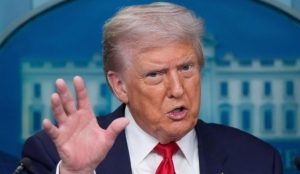
The United States Government has intensified its global crackdown on terrorism financing, designating a Nigerian national and freezing the assets of three Nigerian Bureau De Change (BDC) companies accused of facilitating financial transactions for the Islamic State of Iraq and Syria (ISIS).
The sanctions, announced on Monday by the U.S. Department of the Treasury’s Office of Foreign Assets Control (OFAC), target three individuals and six entities operating across Europe, the Middle East and West Africa, whom U.S. authorities allege played key roles in moving funds for ISIS and its affiliates.
In a statement, U.S. Department of State spokesperson, Thomas “Tommy” Pigott, said the sanctions expose a transnational network stretching from France and Syria to Türkiye and Nigeria.
“Under the leadership of President Trump, the United States is dismantling ISIS’s ability to finance terrorism around the world. We are cutting off the financial lifelines from around the world that enable ISIS to fund attacks, support its regional affiliates, and threaten civilians, including religious minorities”, Pigott stated.
According to the State Department, the designated individuals and entities enabled ISIS to move money across borders through a network of facilitators and money service businesses operating in different jurisdictions.
At the centre of the Nigerian component of the sanctions is Mukhtar Adamu Muhammad, whom U.S. authorities identified as a financial facilitator for the Islamic State West Africa Province (ISWAP), also known as ISIS-West Africa.
The Treasury Department alleged that Muhammad conducted money transfers on behalf of the terrorist organisation and used several financial businesses as conduits for moving funds linked to ISIS activities.
Three Nigeria-based money service businesses allegedly owned, controlled or directed by Muhammad were also sanctioned. They are Nine to Nine Exchange Bureau De Change Limited, Manhattan Bureau De Change Limited, and Generation Currency Bureau De Change Limited.
The Treasury Department said Muhammad was designated pursuant to Executive Order 13224, as amended, for allegedly providing financial, material or technological support to ISIS-West Africa.
“As demonstrated by the May 16, 2026, killing of al-Minuki, the United States and Nigeria stand together in relentlessly pursuing and eliminating ISIS. This includes cooperation in countering the financing of terrorism and protecting the rights of religious minorities”, the Treasury Department stated.
The reference was to Abu-Bilal al-Minuki, described by U.S. authorities as the second-ranking ISIS leader, who was reportedly killed during a joint counterterrorism operation involving the United States and Nigeria in May.
Beyond Nigeria, the sanctions also targeted Miloud Abderrahmane, a France-based facilitator accused of conducting transactions with known ISIS affiliates in Syria and providing information relating to the manufacture and use of explosives.
Another individual designated was Abdelhakim Boukich, a former Dutch national who controls Bitcoin Xchange, a Syria-based money service business allegedly used to transfer funds on behalf of ISIS associates in countries including the United States, Belgium, Norway, South Africa and the Netherlands.
The Treasury Department also sanctioned Mohamad Alhmidan, who had previously been designated by OFAC in 2016 for facilitating logistical and financial support for ISIS. Authorities said Alhmidan owns and controls Spider Gayrimenkul Ve Genel Ticaret Limited Sirketi, a Türkiye-based money service business, as well as Alkaram Danismanlik Gayrimenkul Ic Ve Dis Genel Ticaret Limited Sirketi, which allegedly operates on Spider’s behalf.
According to U.S. officials, financial facilitators have become increasingly important to ISIS as sustained military pressure has forced the group to decentralise its operations and rely on regional affiliates and autonomous cells around the world.
“ISIS continues to seek new methods and tools to finance terrorist attacks. The United States will leverage every tool at its disposal to crush ISIS’s remaining capabilities and protect American lives”, U.S. Treasury Secretary Scott Bessent said.
The Treasury Department noted that financial intermediaries provide critical links between ISIS affiliates and the group’s General Directorate of Provinces, which oversees funding and operational support for regional branches.
As a result of the sanctions, all property and interests in property belonging to the designated persons and entities that are located in the United States or under the control of U.S. persons have been blocked and must be reported to OFAC.
American citizens and businesses are generally prohibited from conducting transactions with sanctioned individuals or organisations unless authorised by the U.S. government.
The Treasury Department further warned that foreign financial institutions that knowingly facilitate significant transactions on behalf of sanctioned persons could face secondary sanctions, including restrictions on maintaining correspondent banking relationships within the United States.
The action forms part of a broader effort by Washington to dismantle the terrorist group’s financial infrastructure and disrupt the networks that enable it to fund attacks, recruit fighters and sustain operations across multiple regions.
Post Views:
566