By Ayo Kehinde
The United States and Iran have signed an interim peace agreement aimed at ending months of hostilities and setting out a detailed 14-point framework for a comprehensive settlement within 60 days.
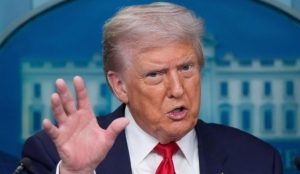
The agreement, which was digitally signed by the US President, Donald Trump, and Iranian President, Masoud Pezeshkian, takes immediate effect and establishes a phased process for ending military confrontation, easing sanctions, and restructuring regional security arrangements.
Pakistani Prime Minister, Shehbaz Sharif, announced on social media that the accord (referred to as the “Islamabad MoU”) would immediately reopen the Strait of Hormuz, while the United States lifts its naval blockade of the waterway. Iran, he added, would guarantee free movement of commercial vessels without charges for an initial 60-day period.
Officials outlined the agreement as a comprehensive political, security, nuclear, and economic roadmap, including the immediate cessation of all military operations between the US and Iran, extension of calm in Lebanon, mutual respect for sovereignty and commitment to non-interference in internal affairs, and the negotiation of a final comprehensive peace agreement within 60 days.
The framework also provides for the phased winding down of the US naval blockade near the Strait of Hormuz and guarantees free and safe passage for all commercial vessels through the strait. It further includes the establishment of a $300 billion reconstruction and economic development fund for Iran, alongside the full lifting of sanctions upon implementation milestones and the issuance of immediate waivers for the export of Iranian crude oil.
Other provisions include Iran’s commitment not to pursue the development of nuclear weapons while maintaining its existing nuclear programme under agreed limits. The deal also provides for the unfreezing of Iranian financial assets abroad and the creation of a joint mechanism to monitor implementation of the agreement, with oversight support from the International Atomic Energy Agency (IAEA).
The United Nations is expected to endorse the agreement, while both sides will transition into detailed negotiations on remaining disputes after initial measures are implemented.
The International Atomic Energy Agency (IAEA), led by Director General Rafael Grossi, welcomed the interim deal, saying it opens the door for technical engagement and verification.
Grossi said the agency would now begin working with both Washington and Tehran to define monitoring procedures and implementation steps.
Iran’s Foreign Ministry confirmed that a planned signing ceremony in Switzerland would no longer proceed, noting that the agreement had already been concluded electronically, although technical delegations are expected to continue consultations.
International reactions have been mixed. France’s special envoy, Jean-Yves Le Drian, warned that the 60-day timeline for reaching a final agreement may be unrealistic, noting that previous negotiations, including the 2015 nuclear deal, took nearly two years to conclude. He stressed that any final agreement must address Iran’s nuclear programme, ballistic missile capabilities, and regional activities through allied groups.