By Ayo Kehinde
Nigeria recorded an estimated $17.78 billion in gross crude oil revenue between February and May 2026, generating a net windfall of $6.51 billion (about ₦9.77 trillion) above the Federal Government’s 2026 budget benchmark oil price of $64.85 per barrel. The earnings surge was driven by elevated global crude prices following the outbreak of the Iran war and a steady recovery in domestic oil production.
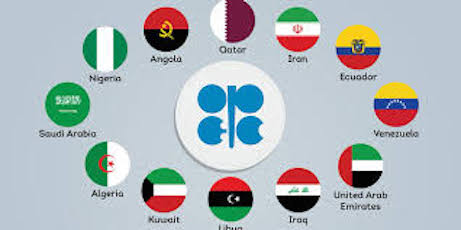
The strongest performance came in May when Nigeria’s crude output rose to a 15-month high of 1.53 million barrels per day (bpd), surpassing its OPEC production quota for the first time in more than a year at 102 percent compliance. The production rebound, combined with war-induced price premiums, provided a significant boost to government revenues and offered relief for the federation account.
Despite the improvement, production remained below the government’s budget assumption of 1.84 million bpd. Between February and May, Nigeria averaged 1.445 million bpd, leaving a cumulative shortfall of 395,250 bpd against fiscal projections. Monthly deficits narrowed from 530,000 bpd in February to 310,000 bpd in May, reflecting gradual operational recovery.
Revenue data show that February generated $3.19 billion in gross crude earnings and a $810 million windfall. March revenue rose to $4.47 billion, delivering $1.55 billion above budget expectations. April produced the highest monthly return at $5.38 billion, aided by an average crude price of $120.36 per barrel, yielding a $2.48 billion windfall. In May, gross revenue stood at $4.74 billion, contributing an additional $1.67 billion surplus.
The revenue boom marks a sharp reversal from recent years. National oil and gas revenues in 2024 fell 24.7 percent below target, generating ₦15.07 trillion, while petroleum tax and gas revenues in the first three quarters of 2025 were 73.92 percent below the projected ₦23.54 trillion.
However, gross earnings do not translate directly into government income. Using an industry operating cost estimate of $25 per barrel, approximately $4.35 billion was absorbed by production and security expenses. Under the standard 60/40 Joint Venture equity structure, NNPC Limited’s share amounted to $10.67 billion, while International Oil Companies received $7.11 billion before taxes.
The price rally was triggered by the February 28 outbreak of the Iran war and disruptions to shipping through the Strait of Hormuz, which redirected buyers toward Atlantic Basin crude grades, including Nigerian blends. Although Brent crude has since eased to around $93.30 per barrel, the earlier surge significantly strengthened Nigeria’s fiscal position and helped cushion its ₦25.91 trillion budget deficit.
Yet the gains have come with domestic consequences. Deregulated fuel prices climbed to between ₦1,300 and ₦1,400 per litre, pushing transportation and food costs higher. According to the National Bureau of Statistics, headline inflation accelerated to 15.69 percent in April, while food inflation reached 16.06 percent, intensifying cost-of-living pressures. Analysts say the windfall presents an opportunity for targeted infrastructure spending and social interventions to offset the impact of rising prices on households.