By Ayo Kehinde
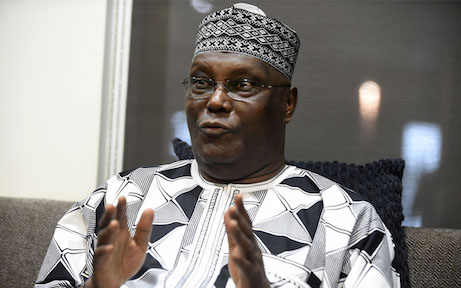
Former Vice-President, Atiku Abubakar, has reaffirmed his backing for a consensus-driven process within the opposition coalition under the African Democratic Congress (ADC).
He also declared readiness to support any candidate that emerges from the arrangement, including former Anambra State governor, Peter Obi.
Speaking during an interview on Prime Time on Arise Television on Wednesday, Atiku said the coalition’s overriding objective is to build a united front capable of strengthening opposition competitiveness ahead of the 2027 general elections.
He stressed that the selection of a presidential candidate should be based on consensus, but noted that a direct primary would be conducted if consensus is not achieved.
“It’s not the issue of stepping aside, but rather would I support? In the coalition, the first option would be to work out a consensus; if that doesn’t emerge then we go for direct primary and I will support anybody who emerges,” he said.
Atiku maintained that consensus remains the preferred pathway within the coalition structure.
“Consensus is the first option as far as the party is concerned. We will aim for consensus; if we don’t get it then we will go for an election,” he added.
When asked whether he would step aside for Obi if he emerges as the preferred candidate, Atiku avoided a direct concession but insisted he would support whoever wins the process.
“I will step aside for any winner,” he said, adding when pressed further, “Of course, if he is a contender, why not?”
The former vice president also confirmed that the 2027 election would be his final attempt at the presidency, marking what would be his eighth run for Nigeria’s highest office.
“Certainly yes. Because the stakes are higher, because I believe that will be my last outing. So that’s incontrovertible,” he said.
Atiku, who served as vice president under Olusegun Obasanjo from 1999 to 2007, said his experience in government remains central to his political outlook, arguing that effective leadership requires both experience and mentorship.
“I represent both the past and the future. We have seen various levels of leadership in the country, both young and old, and we’re experiencing them,” he said.
He also dismissed arguments that Nigeria’s leadership challenge is driven by generational change, insisting instead that governance failures are largely structural and cut across age groups.
“We have had so many young governors in several states who have failed woefully when it comes to governance challenges,” he said.