

By Ayo Kehinde
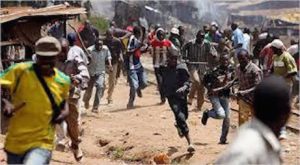
Nigeria is on the brink of a full-blown national crisis, the Arewa Consultative Forum (ACF) has warned, declaring that the country’s spiralling insecurity has effectively reached a “state of war” and demanding an immediate shift to wartime measures to prevent further national collapse.
The stark warning was contained in a communiqué issued after the ACF’s 38th Board of Trustees meeting held in Abuja, where northern leaders expressed grave concern over what they described as a rapidly deteriorating security situation threatening Nigeria’s unity and survival.
The meeting, chaired by Bashir Dalhatu, was attended by prominent figures, including former Inspector-General of Police, Mohammed Abubakar; former Chief of Army Staff, Tukur Buratai; former President of the United Nations General Assembly, Tijjani Muhammad-Bande; and elder statesman, Mahmud Ahmed.
In language that underscores growing frustration among northern stakeholders, the forum said Nigeria’s security challenges—ranging from insurgency in the North-East to banditry, kidnappings, and communal violence across the North-West and North-Central- have escalated into an existential threat.
“Nigeria’s security crisis has moved far beyond a routine governance challenge… to a state of all-out war that now threatens the continued existence of Nigeria as we know it,” the communiqué stated.
The ACF criticised what it implied was a slow and fragmented national response, insisting that the scale and persistence of the violence can no longer be addressed through conventional policy measures. Instead, it called for the Federal Government to elevate insecurity to the country’s foremost national emergency.
The human toll, the forum noted, has been devastating. Across states such as Borno State, Plateau State, Niger State, and Kwara State, hundreds of thousands have been killed or displaced, while entire communities have been uprooted and livelihoods destroyed.
It further highlighted the heavy casualties recorded among Nigeria’s armed forces, including senior officers, warning that the prolonged conflict is stretching the nation’s security architecture and eroding public confidence.
“This is not even counting the large number of our armed forces personnel… Families have been shattered, livelihoods destroyed, and entire generations traumatised”, the communiqué added.
Beyond the humanitarian crisis, the ACF drew a direct link between insecurity and Nigeria’s worsening economic conditions, particularly in the agricultural sector. It warned that persistent attacks on farming communities have disrupted food production and supply chains, fuelling inflation and deepening rural poverty.
“Insecurity is now directly undermining Nigeria’s economy… The longer the crisis persists, the more expensive it becomes to fix”, the forum said.
In a key recommendation, the ACF called for a “war-time approach” to national security, urging the government to temporarily scale down non-essential expenditures and redirect resources toward security operations, intelligence gathering, and stabilisation efforts.
“Extraordinary threats require extraordinary measures”, it stressed, arguing that prioritising security is not a diversion from development but its necessary foundation.
