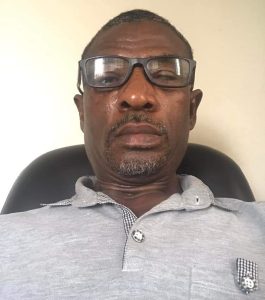
March Oyinki
Bad governance is a globally phenomenon peculiar to countries with irresponsible governments that denies its citizens a good life due to anti-people policies and programmes.
African countries are particular culpable and are decrepit for wastefulness and misappropriation of scarce resources.
Nigeria, particularly, leads the pack of corrupt countries in Africa that have consistently exhibited a total lack of will and capacity to provide good governance to pull its citizens out of poverty.
The collateral failure in the last eight years of the Buhari led APC administration sign posts the abysmal performance of both present and past governments for their inability to adopt the GAP principle of governance and the absolute absence of people-oriented policies and programmes, which have created an abyss of poverty, discontentment and disconnect between the government and the people.
It is unnecessary to over-emphasize the deepening degradation of the quality of life of the citizens of the country by successive government due to excessive self-indulgence, personal aggrandizement and protectionist policies that have consistently glutted the cost of governance.
The seeming de-emphasis of the larger society in national planning has had catastrophic consequences and has been the reason for the failure of previous and present administrations that have made them quite unpopular.
The only administration in the history of our country that is extricated from this list of unpopular government is the General Murtala Mohammed regime.
Though a military dictator, he remains the only head of State that introduced deliberate and extensive people-based policies and programmes that made immediate positive impact on the lives of the citizens.
He achieved that fit by granting import duty wavers on food items, which led to massive importation of food into the country to alleviate the hunger that was eminent in the land at the time.
The General also strengthened security by increasing military presence in all the States, which substantially brought down crime rate. During his short rule, he drastically cut down the cost of governance and introduced the Abuja master plan before his assassination in Lagos in a coup d’etat on February 13, 1976.
The inconsistency of government policies and the deliberate discontinuation and sometimes, outright shift and abandonment of programmes and even the physical destruction of monuments, edifice and landmark projects that were constructed with tax payers money by previous administrations is highly detrimental to the citizens for their prolonged sacrifices, which also have grave consequences in the development and growth of the society, especially, the States.
There are thousands of carcasses of such abandoned projects reminiscent of the retrogressive indulgence of some State governors across the country.
The most recent and painful experience is the senseless and wasteful demolition exercise carried out by the present governor of Kano State, Abba Kabir Yusuf, who pulled down private homes, hotels and Churches worth billions of Naira without any coherent legal justification other than hate and an innate and childish determination to erase the memories of his predecessor.
The emphasis here is the decades of colossal wastage of public funds in the none existent fiscal infrastructural development, which over the years, have only served as channels for inflated contracts that have fueled innate corruption. This has become endemic in our socio-economic polity to the seemingly deliberate exclusion of people-centric developmental approach to governance.
It is needless to remind the government about the extreme poverty in the country, but for the purposes of emphasis we will look at the National MPI Poverty rating by the World Bank, which stands at 0.0257 mpi, representing roughly 133 million poor Nigerians.
Over 86 million (63%) are in the north of the country and about 46 million (37) in the south. This can better be illustrated graphically by the recent reports in the media that poverty is bitting so hard that some families now trade their off-springs just to put food on the table.
It is incomprehensible why African leaders, especially in Nigeria, have failed to realize that the little things that affect the ordinary man in the Street, are, indeed the important and critical ones that require urgent attention.
Because common sense should prick the sensibilities of any right thinking individual that these contrived but relatively simple solutions are surprisingly, the magic wand for delivering good governance, and not the superfluous strategic long-term vision 20 2020 nonsense that have never worked, especially in Nigeria with a highly entrenched corrupt system.
What did Buhari achieve at the end of eight tortious years in power despite trillions of Naira released purportedly to fight poverty.? It is difficult to pin point any plausible achievement to the former president during his administration. Even the former President Olusegun Obasanjo’s administration sank trillions of Naira into the power sector to no avail and in eight solid years could only be credited for sanitizing the communication sector, a singular achievement that substantially transformed that industry.
What actually were the achievements of all past administrations put together? Is it during the administrations of late President Musa Yar’adua of blessed memory or that of President Goodluck Ebele Jonathan? We can continue to count previous administrations and the colossal failure after their tenures. This points to the fact that eight year is not really a lot of time for any administration to pursue non-achievable long term projects. Since 1999, all successive governments have towed that same line of failure.
The immediate need of Nigerians now is the provision of palliatives to cushion the long and painstaking years of sacrifices. The current government should as a matter of emergency, bring down food prices, stabilize the dollar, lower transport cost and school fees by enhancing rail transportation and building more schools.
The real problem facing the country is not the amount of revenue it generates, but the total lack of prudence and accountability in the management of our resources.
Hence, as citizens we are calling on the government to tow the line of the late General Murtala Mohamed by cutting down the cost of governance and focusing on the masses and better their lives in the shortest possible time. That is what Nigerians are yearning for at this critical time of ravaging poverty and hunger in the country. It should stop further with all new taxations and tariff increases and show compassion, pay attention to the people and alleviate them from the bitting hunger and poverty.
At this point the contention of the legitimacy of the presidency of Bola Ahmed Tinubu of the APC should be left to the President Election Petition Tribunal to adjudicate as the matter is subject to litigation and it is being pursued quite vigorously, by the Labour party and its presidential candidate, Peter Obi. Having said that, the reality before us is that presently, Tinubu is the president and he is currently the Captain that steers the Nigeria Project. We will not burn down the country because a few bad leaders have usurped power. When two brothers fight, they do not fight to death.
It is only a fool that will sink a ship in the middle of the ocean that he himself is aboard.
Whether President Ahmed Bola Tinubu will allow himself to be distracted by the paraphenalia and luxuries of the office or he would focus on real governance (emphasis real) and deliver in the shortest possible time, policies and programmes that will make progressive changes and touch the lives of the ordinary man in the Streets in the immediate and short term remains to be seen.
March Oyinki is the President,
Movement For Change Worldwide (MFCW)