

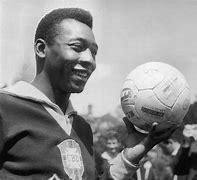
Pele
For reasons outrageously unfathomable, one of the earliest books my late father, Peter Ori, bought for me was – Pele: My Life and the Beautiful Game. It was Pele’s autobiography and edited by Robert L. Fish.
The book contained Pele’s authentic biography. The acclaimed global football megastar noted even to the point of sounding immodest that he never knew how the name Pele came into being.
“I have no idea where the name came from, or who started it, because it has no meaning in Portuguese…They say it just began one day and after that it got stuck… From the time I was nine or so, I was Pele to everyone I know except to my family who continue to call me Dico”. Page 32 of My Life and the Beautiful Game.
He explained that the name Pele must have been a corrupted version of the Portuguese compound word pe – le which means foot!
Playing for local side Santos between 1956 and 1976 where he scored 618 goals, winning six Brazilian League titles., Copa Libertadores, the Brazilian version of Federation Cup, Pele was famously outstanding in the local scene.
In 1958, Pele, as recorded in his autobiography, acknowledged he was both astonished as well as excited when he made the Brazil team to the 1958 World Cup Finals in Sweden. In the end, Pele assiduously, alongside others, assisted Brazil to her first ever World Cup victory.
Sensationally, Pele was in the 1962 Brazilian World Cup team staged in Chile. Again, Pele was quite superb. His brilliance goal strikes, acrobatics, dribbling skills and fantastic accuracy in virtually everything in Chile were unequalled. That way, Pele aided Brazil’s second World Cup success which was achieved back – to – back.
Pele was the cynosure of all eyes in 1966 World Cup Finals in England. He had become a global football idol. In view of that, he was fouled out on the first day of group games. Thus, the South American country never qualified from the group stage.
And in 1970 in Mexico, Pele bounced back stronger as he propelled Brazil to her third World Cup glory. With that blistering performance and incredible achievements, Pele became the first and only player in the history of global football to win the World Cup for three times, playing in four editions.
The fact of the matter is, Pele was world champion at 17 in 1958 and at 30 in 1970 had been thrice world champion in football. After he called it quits in 1970, it took Brazil comprehensive 24 years – at USA ’94 – before lifting the World Cup again. And before his appearance in 1958, Brazil never savoured from the World Cup!
It must be recorded that Pele’s wonderful feats were achieved when attackers used to face vicious and ruthless tackles from defenders unlike what is obtainable now. Again, the offside rule was very inconsiderate to attackers as your partners who were not in possession of the ball were ruled offside when you, the player with the ball, were onside and your goal overruled – Pele was a victim of that rule.
Moreover, Pele, by his own account, scored 1283 goals while Guinness Book of Records credited him with 1279 goals from 1363 games. Yet, that was an era when goalkeepers used to catch back passes from his teammates – thereby making it absolutely very difficult for the attackers of that era. That certainly must have denied Pele many goal opportunities.
“I was the only three-time champion of the world in football! And I played every qualifying game, in all the training games, and in every World Cup game (excluding the 1966 edition) and had us without any injury”. Page 192 of My Life and the Beautiful Game.
Remarkably, Pele made scoring hat – tricks an article of faith., bicycle kick was to him as easy as ABC, scoring goals was simply natural, his shots at goal was quite amazing just as he popularized global football with his stunning overall acrobatics, and he was a model both on and off the field.
Rest in peace Pele, the greatest of all.
