

From Victor Osula, Abuja
Nigeria women on Wednesday won a big victory in their relentless fight for gender equity in the country as Justice Donatus Okorowo of the Federal High Court in Abuja ruled that non-implementation of the 35 percent affirmative action policy of the Federal Government of Nigeria is illegal, unlawful, null and an arbitrary violation of the National Gender Policy, 2006.
The suit was filed by various gender right advocates alleging violations of several sections of the 1999 Constitution, the African Charter on Human and Peoples Rights and several other international treaties.
The court commenced by deciding the preliminary objection of the court wherein the defendants represented by the AGF and Minister of Justice had argued that the plaintiffs lacked the locus standi to sue because none of their rights have been violated.
In resolving this issue, the court ruled that the plaintiffs who are gender groups and NGOs have shown their interest in the suit via their affidavit.
On the main issue, the court struck out the defendants affidavit and held that the plaintiffs have proven their case before the court. The court therefore resolved the two issues in favour of the plaintiffs and granted all the reliefs sought.
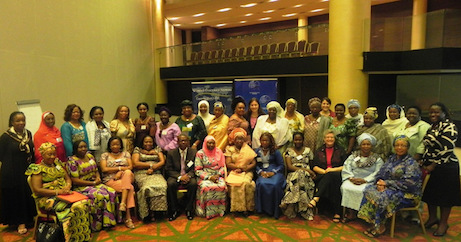
In a statement, the nine women rights’ advocacy groups and co-plaintiff organisations, namely, Nigeria Women Trust Fund (NWTF); Women Empowerment and Legal Aid (WELA); Women in Politics Forum (WIPF); Centre for Democracy and Development (CDD- WEST AFRICA); Women Advocates Research and Documentation Centre (WARDC); Vision Spring Initiatives (VSI); YIAGA, Africa; International Federation of Women Lawyers (FIDA) and 100 Women Lobby Group, stated that the litigation process which has been on since 2020 has come to an end with victory for Nigerian Women and it is hoped that with this clear interpretations of the provisions of the Constitution, Nigeria’s political space will reflect inclusive governance and allow for an enabling environment for women in politics.
Falana and Falana Chambers with Barrister Marshall Abubakar led the group in fighting the legal battle.
Relief sought by the plaintiffs were as follows:
a) A DECLARATION that the failure of the 1st defendant to implement the 35percent affirmative action policy of the Federal Government of Nigeria is illegal, unlawful, null and an arbitrary violation of the National Gender Policy, 2006.
b) A DECLARATION that the failure of the 1st defendant to implement the 35percent affirmative action policy of the Federal Government of Nigeria is illegal, unlawful and a violation of sections 42, 147 (3) and 14 (3) of the 1999 Constitution as amended and Article 19 of the African Charter on Human and People’s Rights.
c) A DECLARATION that the overwhelmingly predominant appointment of the male gender into decision making positions of the Federation is wrong, unlawful, unconstitutional, null and void as it violates Sections 42,147(3) and 14 (3) of the 1999 Constitution as amended and Article 19 of the African Charter on Human and People’s Rights and does violate the right of the female gender to equal access to public offices.
d) AN INJUNCTION restraining the 1st Defendant from further exercising the Constitutional and Statutory power of appointment in a manner violative of the 35 percent affirmative action policy of the Federal Government of Nigeria as contained in the National Gender Policy, 2006.
e) AN ORDER MANDATING the respondents to henceforth comply with the principle of equality of the sexes in all appointments in compliance with Sections 42,147 (3) and 14 (3) of the 1999 Constitution as amended and Article 19 of the African Charter on Human and People’s Rights.
f) AND ANY OTHER The court may deem fit in this matter.
Recall that recently, the National Assembly ignited a national controversy when members voted down constitutional amendments on gender equity. A sieged at the National Assembly by women groups could only get a promise by Speaker, Femi Gbajabiamila to revisit the amendments before their passage to the 36 Houses of Assembly for concurrence.
Except for an amendment that women be given 25 per cent in appointments as Ministers and Commissioners, all other amendments dealing with reserving specific seats for women in the National Assembly, giving citizenship to the foreign-born husband of a Nigerian woman, allowing women to become indigenes of their husband’s state of origin after five years of being together, 35 per cent appointed positions for women and women 35 per cent affirmative action in party administration and leadership, were rejected by the National Assembly.
As the Justice Okorowo ruled Nigerian government has been notorious for non-implementation of national and international instruments it has signed on gender equity, forcing women groups and relevant stakeholders to take their faith in their hands.
