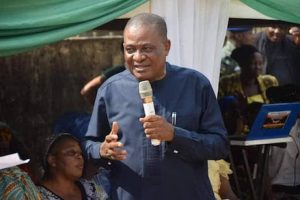
Barr. Ojigbo
As the world is battling the novel pandemic, COVID-19, Nigeria has many lessons including economic, health, and planning for the future among others to learn from its devastating consequences.\
The transition committee chairman, Ikwuano local government council, Deacon (Barrister) Stanley Ojigbo stated this in an interview with Thisage in Umuahia, the Abia state capital.
He said one of the consequences is declining foreign earning from crude oil, which has been suffering free fall, adding that by extension it has also affected the budget estimate for the year.
“As a mono-economy depending almost solely on petro-dollar, anytime the sector suffers a defect, its ripple effects will be immediately felt in every sphere of the economy of the country,” he related.
Ojigbo argued that after the end of the global threat, Nigerians would come to appreciate more the need for diversifying the economy to give serious attention to other sectors especially agriculture.
“After all from the colonial days through the First Republic when the country witnessed unprecedented developmental growth, was the economy not dependent on agriculture and the people were better-off?
He explained that having realised this, the council has keyed into the agricultural revolution being pioneered by Governor Okezie Ikpeazu by encouraging the people to go into massive agriculture.
According to the chairman, this will not only ensure food sustenance and create employments for the people, but will also generate revenue and provide raw materials for some local industries.
Ojigbo, who said what some of us fail to understand when agriculture is mentioned is that it is not limited to farming, animal husbandry, fishery, and piggery among others, added that it goes beyond them.
“Processing, storage, marketing are all part of the agriculture chain which can provide thousands of jobs for those who have been walking the streets looking for nonexistent job,” he further stated.
About the health aspect, Ojigbo maintained that it has created a strong awareness for sustained personal hygiene, environmental cleanliness, and taking precautionary measures before attending to the sick.
“The need for frugality has also been entrenched in the hearts of the people. As long as one is a life, he or she should have it at the back of his or her mind that one day he or she might require a fallback to survive.”