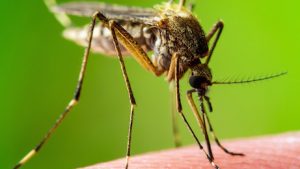
This may be the real news many developing countries, particularly in sub-Saharan Africa would like to hear that scientists have discovered a microbe that completely protects mosquitoes from being infected with malaria.
The team in Kenya and the UK say the finding has “enormous potential” to control the disease.
Malaria is spread by the bite of infected mosquitoes, so protecting them could in turn protect people.
“According to the latest World malaria report, released in December 2019, there were 228 million cases of malaria in 2018 compared to 231 million cases in 2017. The estimated number of malaria deaths stood at 405 000 in 2018, compared with 416 000 deaths in 2017”
The researchers are now investigating whether they can release infected mosquitoes into the wild, or use spores to suppress the disease.
According to the BBC, the scientists discovered the malaria-blocking bug, Microsporidia MB, by studying mosquitoes on the shores of Lake Victoria in Kenya.
The bug lives in the gut and genitals of the insects.
The researchers could not find a single mosquito carrying the Microsporidia that was harbouring the malaria parasite. And lab experiments, published in Nature Communications, confirmed the microbe gave the mosquitoes protection.
“The data we have so far suggest it is 100% blockage, it’s a very severe blockage of malaria,” according to Dr Jeremy Herren, from the International Centre of Insect Physiology and Ecology (icipe) in Kenya.
He added: “It will come as a quite a surprise. I think people will find that a real big breakthrough.”
More than 400,000 people are killed by malaria each year, most of them children under the age of five.
While huge progress has been made through the use of bed nets and spraying homes with insecticide, this has stalled in recent years. It is widely agreed new tools are needed to tackle malaria.
What the scientists plan to do is to infect at least 40% of mosquitoes in a with Microsporidia in order to make a significant dent in malaria.
The microbe can be passed between adult mosquitoes and is also passed from the female to her offspring.
So, the researchers are investigating two main strategies for increasing the number of infected mosquitoes.
- Microsporidia form spores which could be released en masse to infect mosquitoes
- Male mosquitoes (which don’t bite) could be infected in the lab and released into the wild to infect the females when they have sex
“It’s a new discovery. We are very excited by its potential for malaria control. It has enormous potential,” said Prof Steven Sinkins, from the MRC-University of Glasgow Centre for Virus Research.
To understand how the microbe works, the scientists plan to perform more tests in Kenya.