
By Radha Stirling
Ever since the referendum of 2016, Thailand has been in what is officially called a “transition period” that is supposed to move the country out of military dictatorship.
The world remains skeptical, as the junta that controlled the country for two years retains the power to appoint a significant portion of the legislature and holds permanent seats in the senate. There have continued to be disturbing reports from Thailand about human rights violations, political repression and persecution of activists. Just last month bodies filled with concrete were discovered in the Mekong River. They have been identified as aides of missing democracy activist Surachai Danwattananusorn.
In other words, the Thai government has to make an effort to demonstrate to the international community that they are genuinely concerned about human rights.
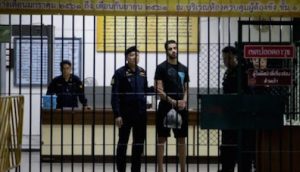
The arrest and detention of refugee Hakeem Alaraibi and Thai authorities’ consideration of an extradition request from Bahrain is not helping the global image of Thailand, and causes grave doubts about the country’s transition to democracy.
Hakeem fled Bahrain after being unjustly arrested and tortured in custody. He was granted asylum by Australia due to the serious risk to his life if he were deported to his home country. Interpol immediately cancelled the Red Notice against him when the organisation realised that Hakeem was a refugee from Bahrain and his extradition to that country would violate Interpol’s policy. Yet Hakeem is still at risk of being returned to his torturers; and this decision is entirely in the hands of the Thai government.

For the international community, the memory of Thailand’s crackdown on peaceful protesters is still fresh, as is the memory of Bahrain’s brutal response to pro-democracy activism in the wake of the Arab Spring. The case of Hakeem provides the Thai government with an opportunity to prove its commitment to human rights and democracy; to honour Australia’s asylum for Hakeem, and to disavow collaboration with authoritarian, repressive regimes.
In the case of Rahaf Mohammed, Thai officials stated that they would not “send someone to their death”, and they won well-deserved praise for their humane handling of the situation. There is no less danger in Hakeem’s case, and Thailand needs to allow him to go home to Australia. If he is returned to Bahrain, not only will he certainly face a repeat of the abuse he suffered during his previous incarceration, but he will be even more severely punished for having fled the country and exposed the abuse he suffered. He will likely face additional charges upon returning to Bahrain, including the “crime” of criticising the government, which could lead to life in prison or even the death sentence.
Australia has one of the most stringent vetting procedures in the world for asylum seekers, and immigration officials were satisfied that Hakeem would not be safe if he were sent back to Bahrain. If Thailand extradites him, they will be effectively overruling Australia’s carefully deliberated judgment on Hakeem’s case, which would certainly be an affront to the two countries’ bilateral relations. Extraditing Hakeem would show to the world that Thailand continues to have an affinity for dictatorships and a dismissive attitude towards human rights and the rule of law. It would show the world, in brief, that the transition to democracy is a charade.
Over the past few years there have been dozens of cases of refugees subjected to Interpol Red Notices by the countries from which they have fled. Interpol has been frequently used by authoritarian governments to persecute political dissidents who have been granted asylum in other countries; creating a sort of collaborative global jurisdiction for dictatorships to pursue critics and those who have escaped their repression.
In response to pressure from human rights organisations, Interpol announced that they would no longer issue Red Notices against refugees on behalf of the countries they have fled. However, this policy lacks any real mechanisms for implementation, as we have unfortunately seen very clearly in the case of Hakeem Alaraibi. Interpol has not established any agreements with the UNHCR, nor with individual national governments to enable data sharing on refugees and those granted political asylum. Thus, Interpol may say that they will not issue Red Notices against refugees, but they have no way of knowing who is a refugee. This means that, like in Hakeem’s case, a Red Notice will be issued regardless, and can only be cancelled after a person’s asylum status has been confirmed; and by then it is too late.
We are therefore calling upon Interpol to immediately implement measures to vet Red Notice requests against available data on refugees and recipients of asylum worldwide to ensure that the Interpol database cannot be misused as a tool of political persecution and authoritarian vendettas. Without such a mechanism for data sharing, Interpol’s stated policy of protecting refugees against malicious Red Notices has no practical substance and protects no one.
Radha Stirling is founder and CEO of UK / USA based legal and human rights organisation Detained in Dubai, Expert Witness and respected analyst of Middle East Policy.